


Key Takeaways
Why does wholesale shipping cost so much?
Because wholesale orders are usually heavy + multi-carton + space-inefficient, and carriers bill by billable weight, not just what your box weighs. Add surcharges and freight fees, and costs climb fast.
Is shipping actually getting more expensive?
Yes. Major carriers increased published rates for 2026 by an average of 5.9%, and surcharges/fees also change regularly.
How do brands reduce wholesale shipping cost without hurting margins?
They do three things well. They ship smarter (parcel vs LTL decision, consolidation, zones), pack smarter (cartonization, accurate dims, fewer oversized boxes) , and charge smarter (clear freight policy, thresholds, negotiated rates, checkout logic)
Should I offer free shipping for wholesale?
Sometimes, if you can fund it with better case packs, higher MOQ, and higher AOV thresholds. If free shipping encourages small wholesale orders, it usually backfires.
Should I use flat rate shipping or live rates?
If your product data and packaging are clean, live rates can be fair and transparent. If not, flat rate (or region-based) is often better until your data is accurate enough to trust.
To reduce wholesale shipping costs, it’s important to understand that wholesale orders differ significantly from direct-to-consumer (DTC) orders. Wholesale shipments tend to be heavier, often shipped in multiple cartons or on pallets. Additionally, they may incur extra charges from carriers due to factors such as dimensional weight, additional handling, and freight accessorial fees.
The good news is that this is fixable. In most cases, brands reduce wholesale shipping costs by tightening packaging data, choosing the right mode (parcel vs LTL), improving fulfillment decisions, and setting a clear wholesale freight policy that buyers can understand quickly.
- Why does wholesale shipping feels expensive than B2C?
- The real reasons wholesale shipping feels so expensive
- 1) You’re paying for billable weight, not just scale weight
- 2) Dimensional weight punishes bulky cartons
- 3) Oversize + additional handling surcharges stack fast
- 4) “Distance” matters more than you think (zones)
- 5) Wholesale orders often shouldn’t ship as parcels
- 6) Freight “accessorials” are the silent killer
- 7) Your product weights/dimensions are wrong (or missing)
- 8) You’re paying retail-ish shipping rates for wholesale behavior
- Why wholesale shipping feels expensive than B2C?
- How do brands reduce wholesale shipping costs for their business?
- Step 1: Map your wholesale shipments into three buckets
- Step 2: Fix packaging and cartonization for top SKUs
- Step 3: Create a clean parcel vs LTL rule
- Step 4: Consolidate shipments on purpose
- Step 5: Negotiate based on your profile (not “discount %”)
- Step 6: Build a freight policy buyers can understand in 20 seconds
- Step 7: Charge smarter (without losing deals)
- Step 8: Use your wholesale setup to prevent small, inefficient orders
- How to set this up cleanly on Shopify?
Why does wholesale shipping feels expensive than B2C?
A typical DTC/B2C order is designed to be “one box, one label, one doorstep.” Wholesale is rarely that clean.
Most wholesale orders are different in a few predictable ways:
- They often ship in multiple cartons or on a pallet, especially when buyers order case packs.
- They have a higher total weight, which pushes shipments into higher cost brackets.
- They include bulk packaging formats (master cartons, display units, prepacks) that take more space and trigger dimensional pricing.
- They get delivered to business locations with receiving rules (dock hours, appointment windows, liftgates), which is where freight accessorial charges show up.
Where many brands get stuck is that they run wholesale shipping with DTC assumptions. They reuse the same boxes, keep the same “flat rate,” and try to figure it out after the order lands. That’s usually the moment shipping starts eating margin—or killing deals.
The real reasons wholesale shipping feels so expensive
1) You’re paying for billable weight, not just scale weight

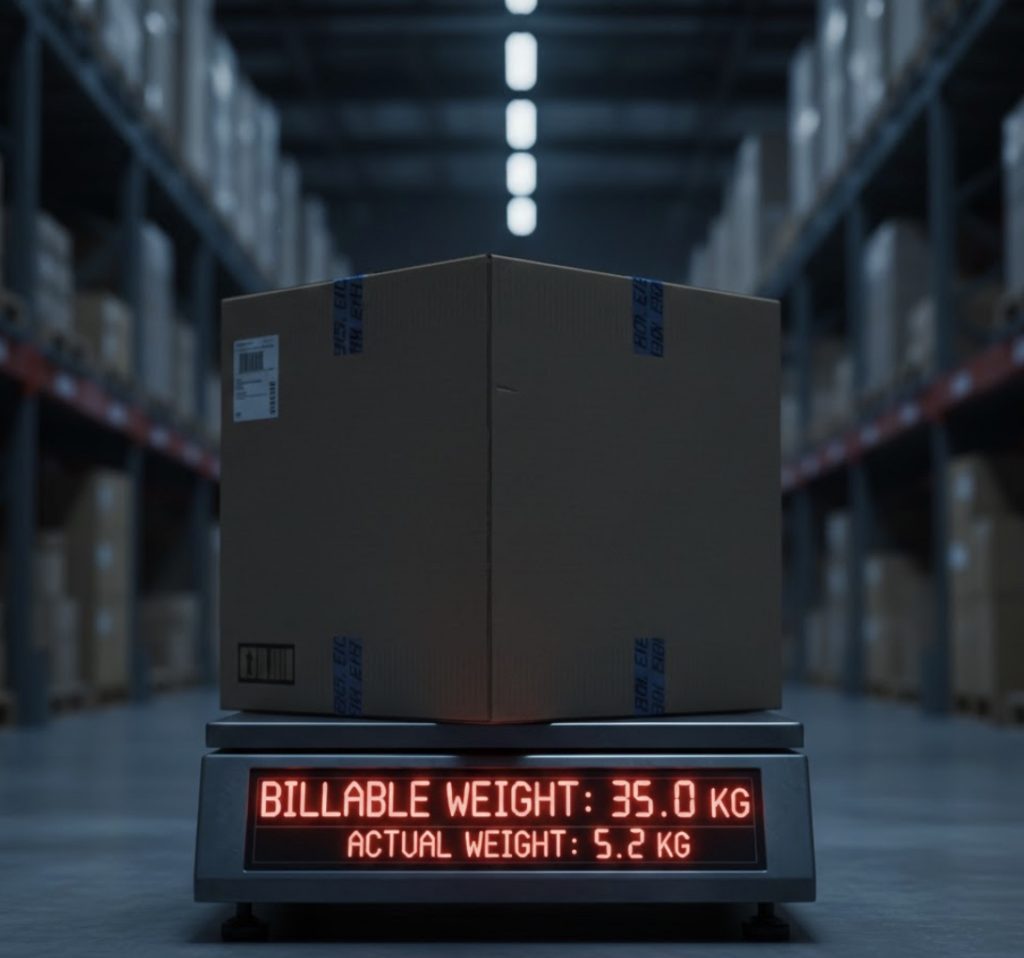
Carriers don’t always charge based on what your carton weighs on a scale. They often charge based on whichever is higher: actual weight or dimensional weight (how much space the box takes).
That’s why a big, light carton can cost more than a smaller, heavier one.
Quick fix: Tighten packaging and reduce empty space, so you stop paying to ship “air.”
2) Dimensional weight punishes bulky cartons
If you sell products that ship in larger cartons—pillows, apparel prepacks, display boxes, bundles—DIM weight can quietly become the main driver of cost.
Quick fix: Re-box where possible, reduce void fill, and define a clear “master carton strategy” for wholesale.
3) Oversize + additional handling surcharges stack fast
Wholesale shipments are more likely to hit thresholds that trigger surcharges. For example, UPS notes that Additional Handling can apply when the longest side exceeds 48 inches or the second-longest side exceeds 30 inches.
Once a shipment triggers these rules, the final invoice can include multiple layers: base rate, DIM adjustment, handling fees, large package charges, and fuel.
Quick fix: Redesign cartons to stay under surcharge thresholds where you can, and flag “problem” SKUs that consistently trigger fees.
4) “Distance” matters more than you think (zones)


Parcel shipping is heavily distance-based. Two identical cartons can cost very different amounts simply because one buyer is farther away.
That’s why shipping can feel “random”: nothing changed in your packing, but the destination did.
Quick fix: Use multiple fulfillment locations (or a 3PL with distributed inventory) for your wholesale-heavy regions.
5) Wholesale orders often shouldn’t ship as parcels

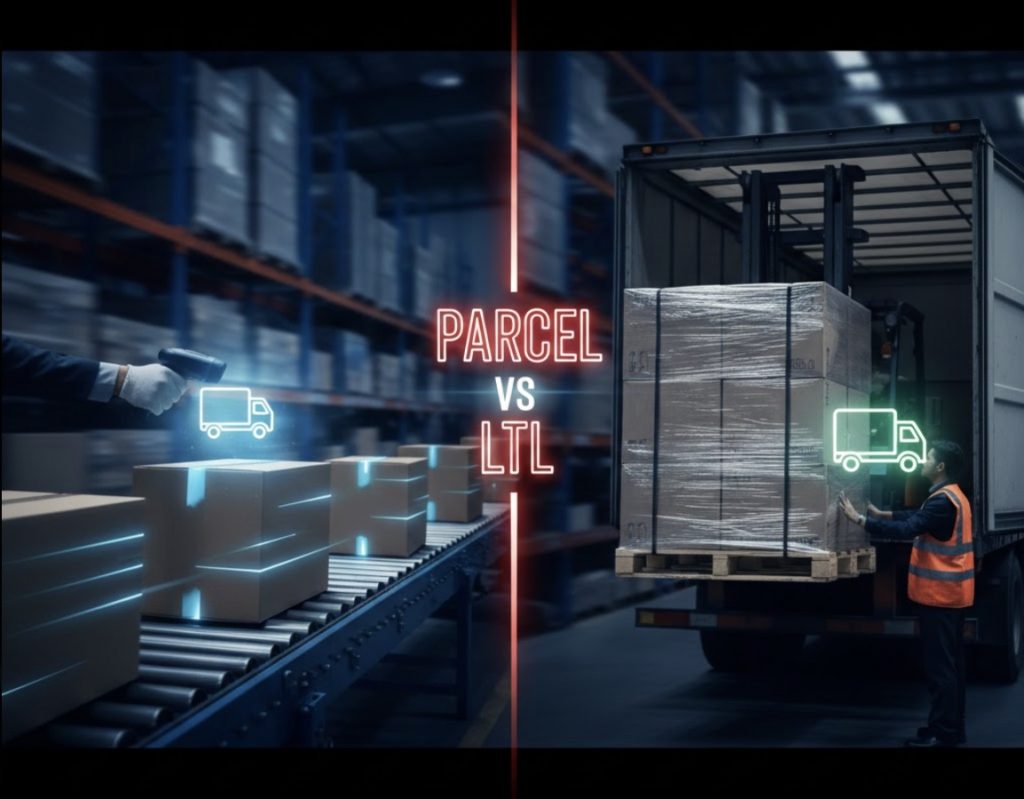
When orders become multi-carton and heavy, parcel is often the wrong tool.
A useful starting guideline: UPS treats packages over 150 lb as freight and NMFTA describes LTL as a strong fit for freight roughly 150 to 10,000 lb that benefits from palletized transport.
Quick fix: Price both parcel and LTL for your larger orders and choose the better option by lane, instead of defaulting to parcel.
6) Freight “accessorials” are the silent killer
If you ship LTL (or even some special services), extra charges are common. The big ones include liftgates, appointment delivery, limited access locations, inside delivery, and redelivery.
These charges aren’t rare in B2B. They happen because business receiving is structured, and carriers charge for anything outside a standard dock delivery.
Quick fix: Capture delivery requirements upfront (dock/forklift/appointment/liftgate) and build that into your checkout and quoting process.
7) Your product weights/dimensions are wrong (or missing)
This is one of the most fixable causes of high shipping costs.
If your store data is off—weights are underestimated, carton dimensions are missing, or everything ships using a “default box”—your rates and your invoices will drift.
Quick fix: Start by auditing your top SKUs and top wholesale bundles. You do not need to fix your entire catalog in one week.
8) You’re paying retail-ish shipping rates for wholesale behavior
Carrier pricing is negotiated, but many brands stay on default pricing even as wholesale volume grows.
Also, rates generally increase over time. UPS states that its published rates increased an average net 5.9% effective December 22, 2025.
FedEx also states that standard list rates increased an average of 5.9% effective January 5, 2026.
Quick fix: Negotiate based on your real shipment profile (zones, weights, DIM exposure, oversize frequency), not just a headline discount.
The hidden fees that surprise wholesale teams
Here are the ones that create the most “wait…why?” moments:
- Dimensional weight pushing billable weight higher than the scale weight.
- Additional handling/oversize fees when cartons cross size thresholds.
- Address corrections from incomplete business addresses.
- Appointment delivery and liftgate charges for freight shipments.
- Split shipments when items ship from different locations, doubling shipping.
- Duties/taxes on international shipments depend on who is the importer of record.
- Minimum charges that become more painful after annual rate updates.
Most brands don’t solve wholesale shipping by “finding cheaper shipping.” They solve it by reducing how often they trigger these fees.
How do brands reduce wholesale shipping costs for their business?
This is the process that works across categories (apparel, food, beauty, home goods, industrial, etc.).
Step 1: Map your wholesale shipments into three buckets
Start simple. Most brands fall into these buckets:
- Small wholesale: 1–2 cartons
- Mid wholesale: 3–10 cartons
- Large wholesale: Pallet / Freight
For each bucket, write down your typical order value, carton count, and delivery type. This quickly shows you where the money is leaking.
Step 2: Fix packaging and cartonization for top SKUs
Choose your top 20 wholesale SKUs (or bundles) and verify the basics: unit weight, case pack weight, master carton dimensions, and “ships alone” flags.
Then focus on reducing wasted space. Smaller cartons and better case packs reduce DIM exposure and help you avoid handling fees.
Step 3: Create a clean parcel vs LTL rule
A practical approach is: keep small wholesale on parcel, move heavy/multi-carton shipments to LTL.
Use 150 lb as a starting checkpoint (because carriers commonly treat that as freight), but always validate with real pricing for your most common lanes.
You can use a Wholesale Pricing Calculator to estimate your final wholesale pricing, which considers all additional costs.
Step 4: Consolidate shipments on purpose
Wholesale buyers hate tracking chaos. When deliveries arrive in fragments, it creates receiving headaches and more customer support.
Brands improve this by setting wholesale ship days, consolidating cartons, and palletizing earlier for large orders. It often lowers cost and improves buyer experience.
Step 5: Negotiate based on your profile (not “discount %”)
When you negotiate, lead with what actually drives cost: zone distribution, average dims, oversize frequency, pickup cadence, and residential mix.
A “good discount” can still be expensive if your shipments get hit by DIM and surcharges every day.
Step 6: Build a freight policy buyers can understand in 20 seconds
Buyers are not upset that shipping costs money. They get upset when it feels unpredictable or hidden.
A clear wholesale shipping policy usually includes ship windows, freight terms (prepaid/add vs collect), free freight thresholds (if any), and how LTL deliveries work (appointments, liftgates, dock requirements).
Step 7: Charge smarter (without losing deals)
Brands usually pick one of these (or a hybrid):
- A freight allowance (free shipping over a threshold).
- Flat rate shipping by region for predictability.
- Pass-through live rates when data is accurate.
- Flat rate for small wholesale + freight quote for large orders.
The best option is the one that matches your real order buckets.
Step 8: Use your wholesale setup to prevent small, inefficient orders
A surprising amount of shipping pain comes from orders that were never worth shipping in the first place.
Brands fix this by enforcing MOQs, case packs, and minimum order value for wholesale checkout. When your wholesale setup is structured, buyers naturally place orders that ship more efficiently.
How to set this up cleanly on Shopify?
A) Use Shipping Profiles properly
Shopify shipping profiles let you set shipping rules for specific products and locations, instead of forcing everything into one messy setup.
This is especially useful if wholesale items ship differently than retail, if some SKUs require special packaging, or if you fulfill from multiple locations.
B) Show real-time rates when it makes sense
Shopify supports carrier-calculated shipping if you connect carrier accounts. Shopify then requests live rates based on weight, dimensions, and destination.
This works best when your product data and packaging defaults are accurate. If your data is still messy, starting with flat or region-based rates can be the safer first step.
C) If you’re a blended store: Separate what B2B and DTC see
On Shopify Plus, you can personalize B2B checkout experiences, including shipping methods. Shopify’s blended-store checklist notes that you can customize the availability of payment and shipping methods using Checkout Blocks or apps using delivery functions.
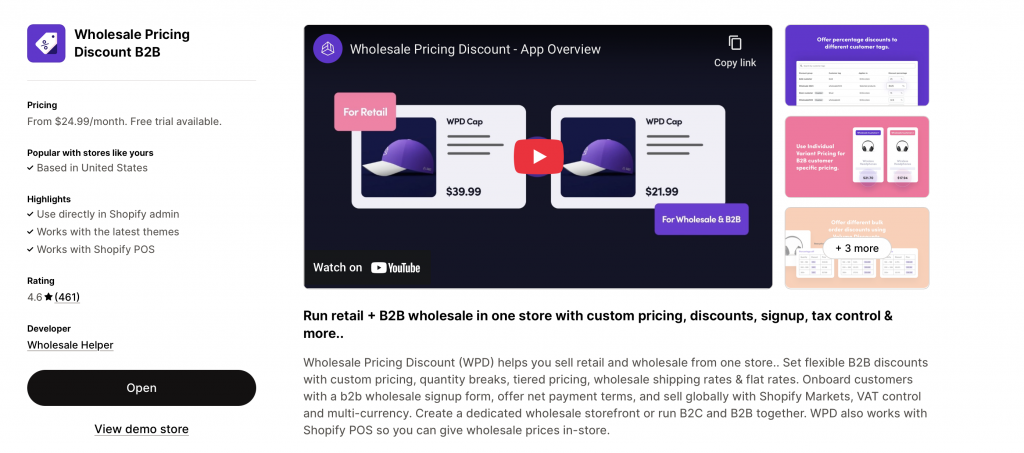
If you’re not on Plus, many brands still separate wholesale vs retail shipping experiences using a mix of shipping rules and wholesale access control (so retail customers don’t stumble into freight-only flows). Applications like Wholesale Pricing Discount B2B help you to set up customized wholesale shipping rates on your Shopify store.

Summing Up
Wholesale shipping feels expensive because wholesale orders are heavier, more carton-heavy, and more likely to trigger carrier pricing rules like dimensional weight and handling surcharges. They also involve B2B delivery realities—appointments, liftgates, and receiving requirements—that simply don’t show up in standard DTC shipping.
Brands fix it by making shipping predictable and intentional. They clean up weights and dimensions, improve cartonization, decide clear parcel vs LTL rules, consolidate shipments, negotiate based on their true shipping profile, and set a simple freight policy that buyers can understand quickly. Once the basics are tight, shipping stops being a surprise cost—and becomes a controlled part of the wholesale margin model.