



If you’re in the home and living space, you know that shipping a beautiful ceramic vase is nothing like shipping a t-shirt. Your margins are at the mercy of things like dimensional weight, breakage, and carrier surcharges—the tiny details that can quickly erode a healthy profit.
This guide to wholesale pricing for home and living stores is your playbook for building a pricing architecture that not only makes sense but is also resilient to the common pitfalls of this industry. We’ll show you how to price your products to protect your margins, make your retailers profitable, and keep your inventory moving without endless haggling.
Foundational Architecture to Wholesale Pricing for Home and Living Stores
A great pricing strategy for home and living is a delicate balance. It starts with your true landed cost and builds a tiered pricing structure that accounts for the realities of the product itself. You need to protect your margins while still giving your retailers a fair shake. Here’s a quick overview of what a healthy margin looks like for different sub-categories:
| Sub-category | Retailer Margin Target (off MSRP) | Your Wholesale (% of MSRP) | Key Operational Notes |
| Textiles (throws, cushions) | 50–60% | 40–50% | Bulky but light; watch out for DIM weight. |
| Tabletop (stoneware, glass) | 50–60% | 40–50% | High breakage risk; requires strong packing and a damage allowance. |
| Kitchen Tools/Utensils | 45–55% | 45–55% | Small and dense; perfect for tier breaks at case multiples. |
| Lighting (lamps, pendants) | 45–55% | 45–55% | Certifications and returns cost more; expect oversize surcharges. |
| Small Furniture | 40–50% | 50–60% | High freight costs; ship in master cartons with fewer tiers. |
You can use this table as a starting point to sanity-check your own margins before you even think about publishing a line sheet. You can also use a Wholesale Price Calculator to determine your wholesale pricing strategy along with pricing tiers accurately.

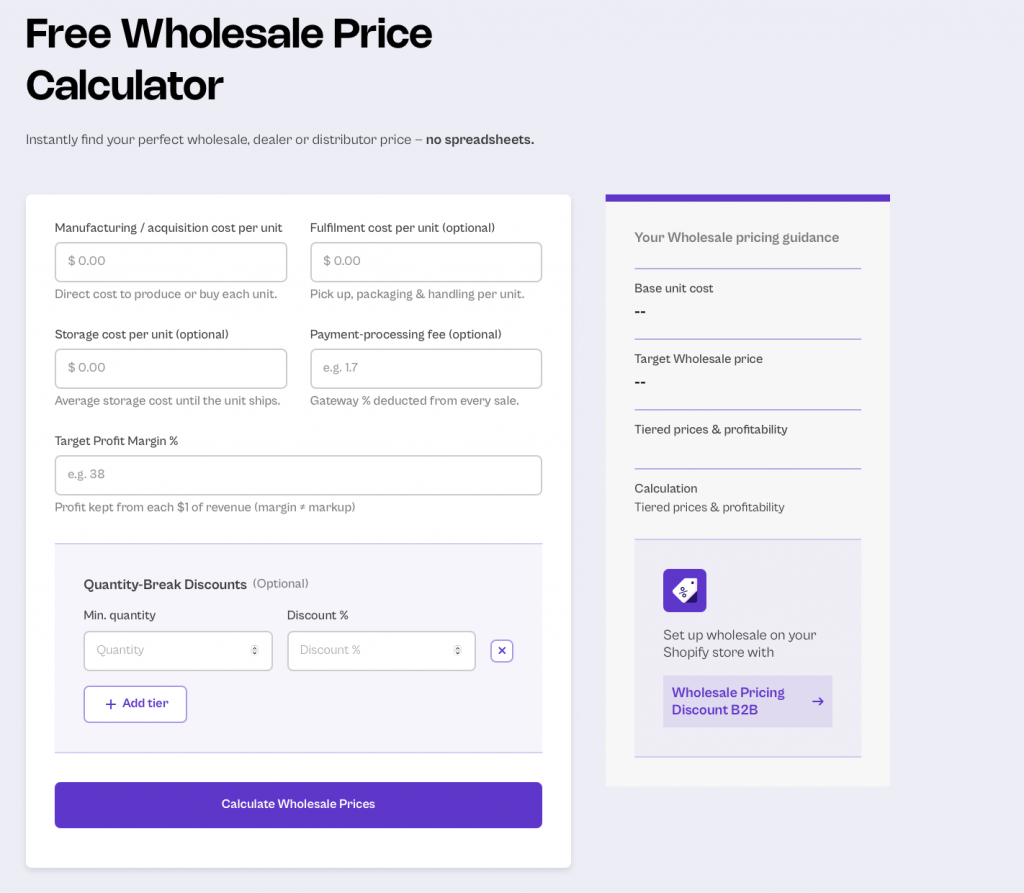
Find Your Perfect Wholesale Price in Seconds
Calculate My Wholesale Price for FREE
Instantly calculate the right price to maximize profit and keep your customers happy.
How to Set Wholesale Pricing for Home and Living Stores (4 Phases)
Phase 1: Getting Your Numbers Right
The single most important step is to calculate your landed cost accurately. This is the total, per-unit cost of a product ready to be sold, including all the hidden expenses that will eat away at your profits.
For home and living, your landed cost must include:
- The Product Itself: The cost of materials, labor, and assembly.
- Protective Packaging: The cost of inner and master cartons, corner guards, and foam. This is non-negotiable for fragile goods.
- Inserts: The cost of things like hardware bags and instruction manuals for flat-pack furniture.
- Inbound Freight & Duties: The cost to get the goods to your warehouse, including import duties.
- DIM-Weight Surcharges: For bulky but light items like lampshades and pillows, carriers charge based on the size of the box, not the weight. This can destroy your margins if you don’t account for it.
- 3PL & Palletization Fees: The costs for a third-party logistics provider to receive, store, and pick/pack your goods.
- Damage/Returns Allowance: This is a non-negotiable line item. Budget for a 1–3% allowance on decor and a 3–5% allowance for fragile items like stoneware and glass to cover inevitable breakage.
Example: A Set of 4 Stoneware Mugs
Let’s say your product costs are $8.10. You need to add $0.50 for foam, $0.35 for the master carton, and $1.20 for freight and duties. Then, factor in $0.55 for 3PL and a damage allowance of 3% ($0.32). After a small allowance for operations, your true landed cost is $11.20. Missing any of these steps could leave you unprofitable from the start.
Phase 2: Building Your Wholesale Program
MOQs, Case Packs, and Variants That Actually Move Inventory
The key to a smooth wholesale operation is to keep your products in multiples that are easy to pick, pack, and ship safely. This is where a clear case pack and MOQ (Minimum Order Quantity) strategy comes in.
- Tabletop & Glass: Ship in case packs of 4 or 6, with an MOQ of 2 cases per SKU.
- Textiles: Ship in case packs of 6 or 10, with an MOQ of 1-2 cases. You can allow buyers to mix and match colors within a case.
- Lighting: Ship 1 unit per master carton, with an MOQ of 4–6 master cartons across a collection.
You can also use assortment codes (e.g., “Cushion—Neutrals 6-pack”) to make ordering mixed variants simpler.
Tiered Discounts That Are Logical
Discounts should never feel random. They should be tied directly to a real logistical win for you, like a full case, half-pallet, or pallet. Don’t offer a total discount past 10–12% unless the savings from palletization are significant.
Example: Stoneware Mugs (MSRP $40, Wholesale $20, Landed $11.20)
- Tier 1 (MOQ): 12 sets (2 cases) at $20.00. Your margin is a healthy 44.0%.
- Tier 2: 48 sets (half-pallet) at a 5% discount, or $19.00. Your margin is still strong at 41.1%.
- Tier 3: 120 sets (full pallet) at a 10% discount, or $18.00. Your margin is 37.8%, but the logistics savings make it worthwhile.
Ready to impress your B2B customers? Start wholesaling like a pro! 🙂
Try our Wholesale Pricing Discount app for free !
Trusted by over 15,000 Shopify merchants
Phase 3: Your Logistics & Policy Playbook
This is where you show buyers you’re a professional operation. Have a clear, one-page policy for freight and damages.
- Freight Policy: Choose a model and stick to it. You can offer prepaid freight at a threshold (e.g., “$1,200 net wholesale”), use a flat inbound surcharge by zone, or opt for FOB origin for large, heavy items, where the buyer arranges pickup.
- Damage Policy: Be crystal clear about your process. State a damage window (e.g., “report within 5 business days with photos”) and define your remedy order: first replace, then offer a credit, then a refund.
- Returns Policy: Clearly state your policy for no-fault returns, including a restocking fee of 10–15% and the buyer’s responsibility for return freight.
For international sales, be mindful of DIM weight on textiles, as it can kill your margins, and remember that VAT is a major consideration in the UK and EU.
Phase 4: Making It All Work on Shopify
A clean and simple Shopify setup prevents mistakes and makes reordering a breeze.
- For Shopify Plus: Use the native B2B price lists to build tiered pricing and MOQs. You can also enforce Net terms on each company profile.
- For non-Plus Plans: Use a suite of apps to build your system.
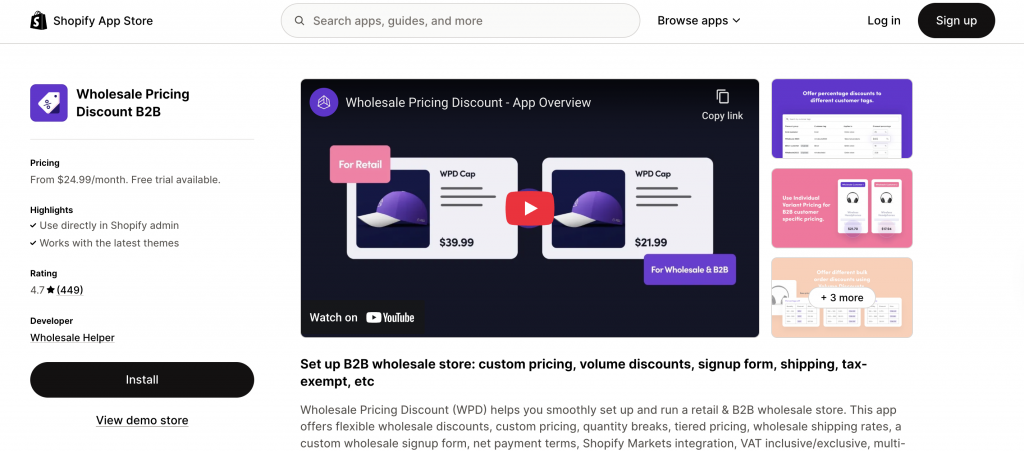
- Wholesale Pricing Discount B2B: Your pricing engine for customer-specific prices and quantity breaks.

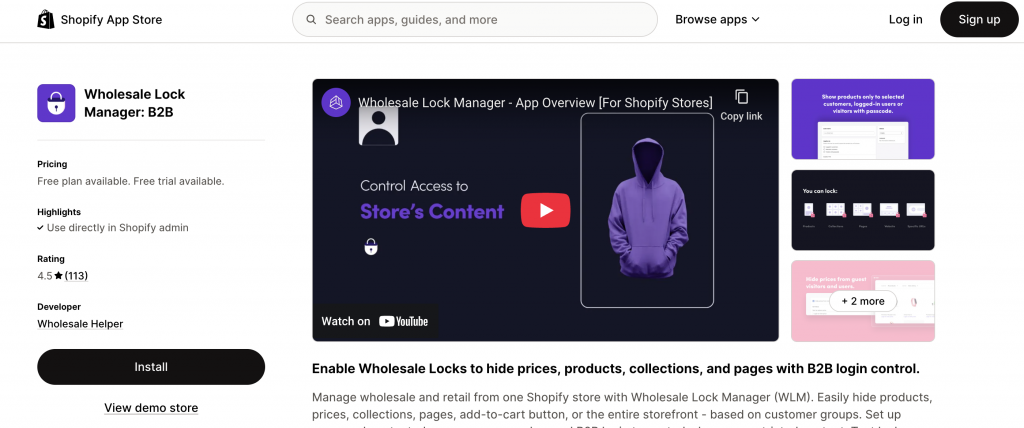
- Wholesale Lock Manager B2B: Hides prices and products from retail customers.

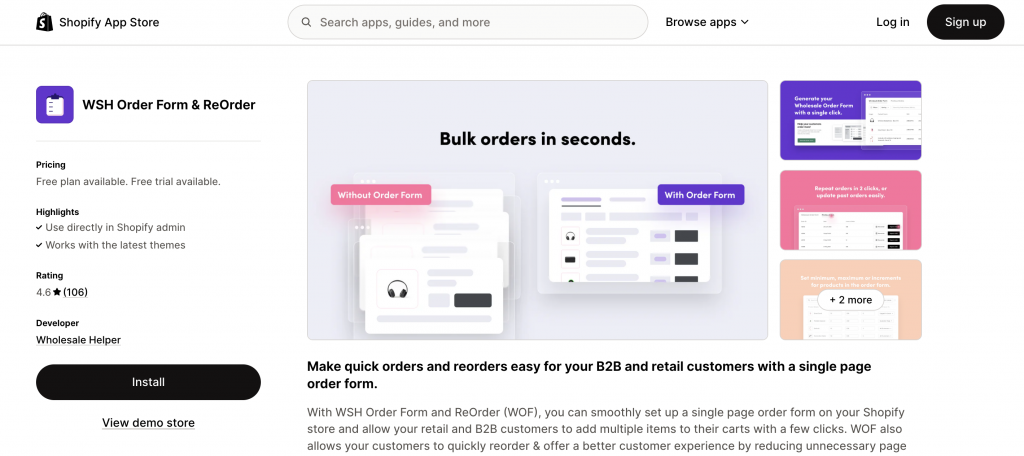
- WSH Order Form & ReOrder: A simple grid-style order form that buyers love for quick replenishment.

A Quick Checklist Before You Go Live:
- Does every SKU have a landed cost that includes DIM weight and a damage allowance?
- Do your case packs and MOQs make sense for your products?
- Is your freight and damage policy crystal clear and easy to understand?
- Have you set a MAP (Minimum Advertised Price) policy to protect your online sellers?
- Is your Shopify B2B setup clean and ready for buyers to use?
Ready to impress your B2B customers? Start wholesaling like a pro! 🙂
Try our Wholesale Pricing Discount app for free !
Trusted by over 15,000 Shopify merchants
Final Summary – Wholesale Pricing for Home and Living Stores
For home and living brands, running a successful wholesale program means protecting your margins from the thousand tiny cuts that come with shipping fragile and bulky goods. This guide helps you do just that. It walks you through how to build your prices from the ground up, factoring in critical costs like breakage and dimensional weight.
We then show you how to structure your catalogue with easy-to-ship case packs, simple tiered discounts, and clear policies for freight and damages. By supporting your retail partners with the visuals they need and setting up a clean Shopify system, you can build a wholesale channel that is both profitable and painless.
Frequently Asked Questions
Why does DIM weight matter for my business?
DIM (Dimensional) weight is a hidden cost that can really catch you off guard. Basically, a carrier will charge you for either a package’s actual weight or its “DIM weight”—whichever is higher. For bulky but light items like pillows or big lampshades, the cost is almost always based on size, not weight. If you’re not factoring that into your landed cost, your shipping expenses can easily wipe out your entire profit.
What’s the best way to handle a damage claim on fragile items?
The most important thing is to have a clear process that makes it easy for your buyers. Ask them to report any damage within a few business days with a photo of the item and the packaging it came in. This gives you what you need to file a claim with your carrier. As for the solution, it’s best to handle it in this order: try to send a replacement, then offer a credit, and a refund should always be your last resort.
What’s the best way to handle freight costs for bulky items?
For small, dense items, you can use a flat rate. For large, bulky items like furniture, it’s often best to use an FOB origin policy, where the buyer arranges their own pickup. For everything in between, a prepaid freight threshold (e.g., free shipping on orders over $1,200) is a great way to incentivize larger orders.
Should I offer different pricing to different types of customers?
Absolutely. You can create different pricing tiers for different types of customers (e.g., standard retailers, interior designers, distributors). On Shopify Plus, you can do this with native B2B price lists. On a standard plan, apps can handle this by tagging customers.
How do I calculate a “damage allowance” in my landed cost?
The damage allowance is a small percentage you add to your landed cost to cover the cost of replacing damaged goods. For textiles and decor, a 1–3% allowance is standard. For fragile items like glass and stoneware, you should budget a higher 3–5% allowance. This money acts as a buffer so that one broken item doesn’t eat into your profit.
What’s the difference between a case pack and an MOQ?
A case pack is the number of units that come in a single shipping carton (e.g., 4 mugs in a case pack). The MOQ (Minimum Order Quantity) is the smallest number of units a buyer can purchase from you (e.g., 2 case packs, or 8 mugs).