
Key Takeaways
- You do not always need a second Shopify store to manage distributors and resellers. Most brands can run B2B and DTC from the same store with the right pricing, access, ordering, and automation setup.
- Shopify now offers native B2B features on Basic, Grow, Advanced, and Plus plans, but feature depth still depends on your plan. Apps are still useful when you need more flexible pricing, customer-tag based pricing, locked catalogues, fast bulk ordering, or custom reseller workflows.
- For most distributor and reseller setups, the core app stack should cover four areas: pricing, access control, ordering, and payment follow-up.
- Wholesale Pricing Discount B2B, Wholesale Lock Manager B2B, and WSH Order Form & ReOrder work well together because they cover pricing, gated access, and bulk ordering. All three are Built for Shopify.
- Use automation apps like Shopify Flow and Zapier only after your core reseller workflow is clear. Otherwise, automation can make a messy process harder to fix.
Managing distributors and resellers on Shopify is a lot more than just about offering a discount. Your B2B buyers need the right prices, gated catalogue access, quick bulk ordering, payment terms, invoices, and a simple reorder flow.
In 2026, Shopify gives merchants more native B2B options than before. B2B features are now available on Basic, Grow, Advanced, and Plus plans, though some advanced features still depend on your plan.
That said, many merchants still use apps when they need more control over customer-specific pricing, reseller approval, locked catalogues, volume discounts, quick order forms, invoices, payment reminders, or integrations with other systems.
This guide covers the best Shopify apps for managing distributors and resellers in 2026, broken down by what they actually help you do.
Requirements in your store to serve Distributors and Resellers
Before you start adding apps, think about the primary problems you need to solve. A successful wholesale setup boils down to a few key areas:
- Pricing & Access: You have to show the right prices to the right people, and keep everything else hidden from the public.
- Ordering: Your partners need a fast, simple way to place a large order without a ton of clicking.
- Backend & Money: You’ll need to handle invoices, payments on credit (net payment terms), and keep your data organized without pulling your hair out.
Let’s dive into the apps that solve these problems.
10 Best Shopify Apps for Managing Distributors & Resellers (Category-wise)
Category 1: For Pricing & Access Control
When you’re running a B2B business, your prices are private, and your catalog is often exclusive. These two apps work together perfectly to handle that.
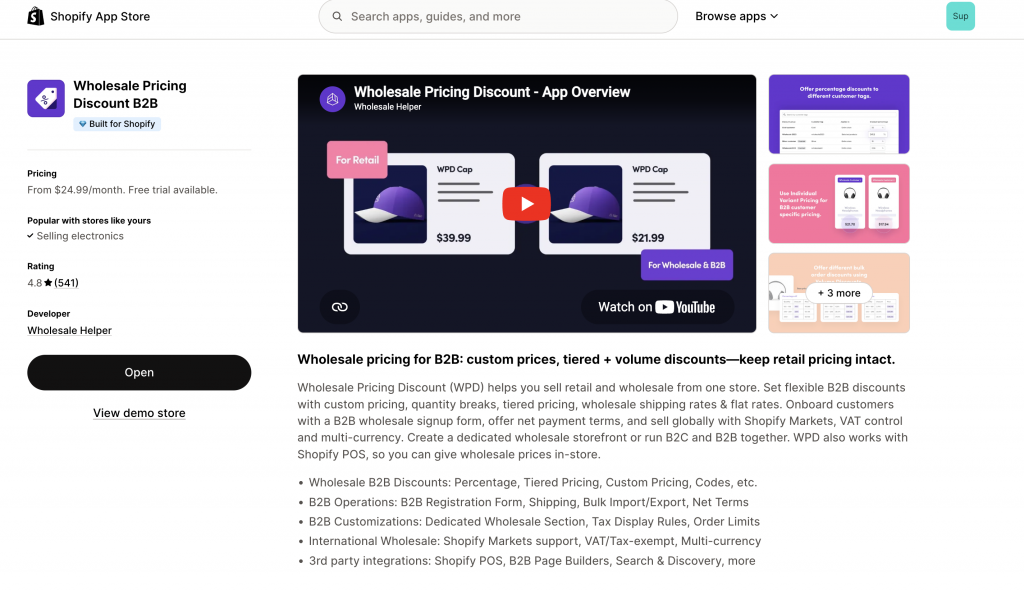
1. Wholesale Pricing Discount B2B
Wholesale Pricing Discount B2B is the main pricing app for Shopify stores that want to manage reseller, distributor, dealer, or wholesale pricing from one store. You can use it to create customer tag-based pricing, percentage discounts, custom pricing, quantity breaks, tiered pricing, order minimums, net terms, shipping rules, tax display controls, multi-currency pricing, Shopify Markets support, and POS wholesale pricing.
This is useful when you have different B2B buyer types, like retailers, distributors, VIP resellers, regional partners, or trade accounts. Instead of showing the same price to everyone, approved buyers can log in and automatically see the pricing rules meant for them.
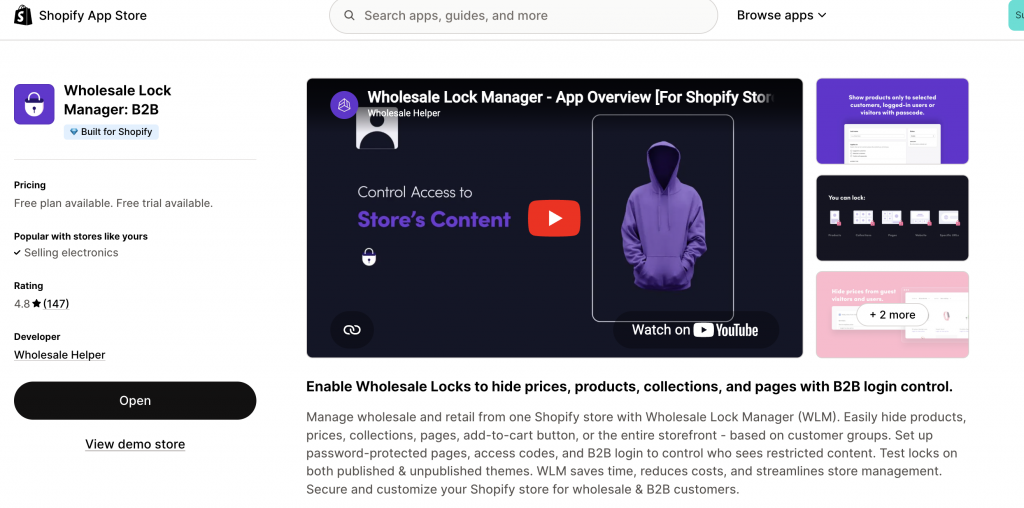
2. Wholesale Lock Manager B2B
This app acts as the bouncer for your store. You can hide entire collections, specific pages, or even your whole store from public view. This means only your approved resellers can access your B2B catalogue, keeping your prices and products completely confidential.
Category 2: For Making the Ordering Process Easy
Wholesale buyers don’t want to mess around with a normal shopping cart. They want to get in, order what they need, and get out. These apps are designed to make that happen.
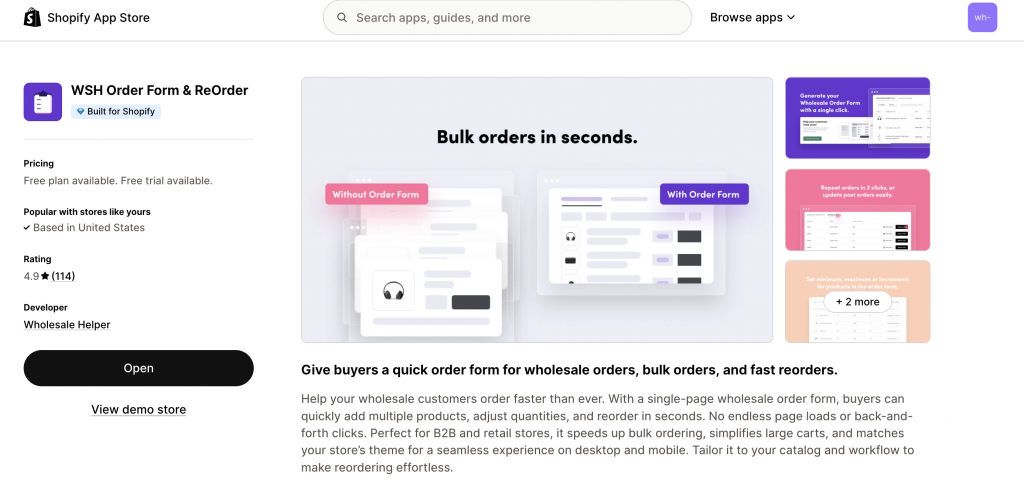
3. WSH Order Form & ReOrder
This app is a must for high-volume orders. Instead of clicking on multiple pages, your resellers get a single, fast order form. They can quickly choose multiple products and quantities from a list and add everything to their cart at once. Plus, it adds a “reorder” button to their past orders, which is a huge time-saver for them and great for your repeat business.
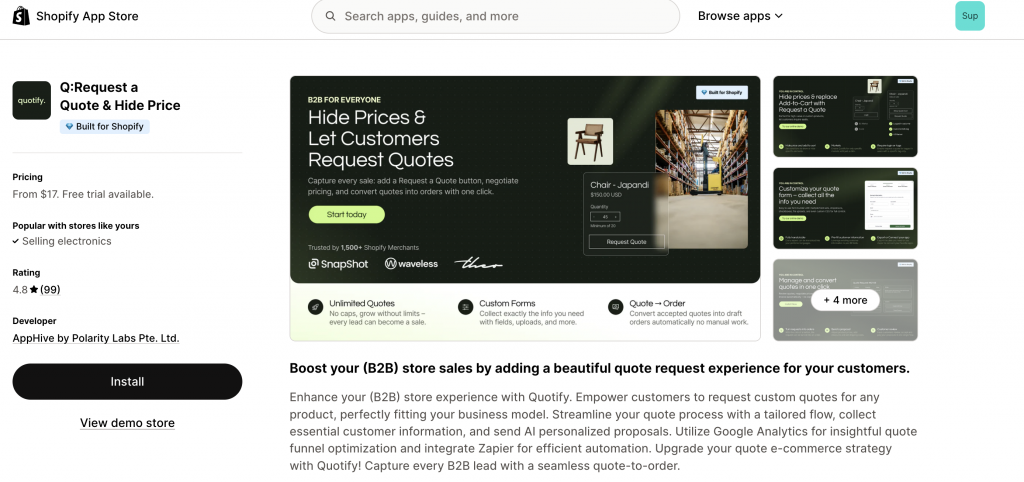
4. Quotify: Easy Quote Requests
Not all B2B orders are simple. Sometimes, a partner needs a quote for a custom order or a huge volume purchase. This app adds a “Request a Quote” button to your products, so your partners can ask for a specific quote instead of just placing an order.
5. Uncap Quotes
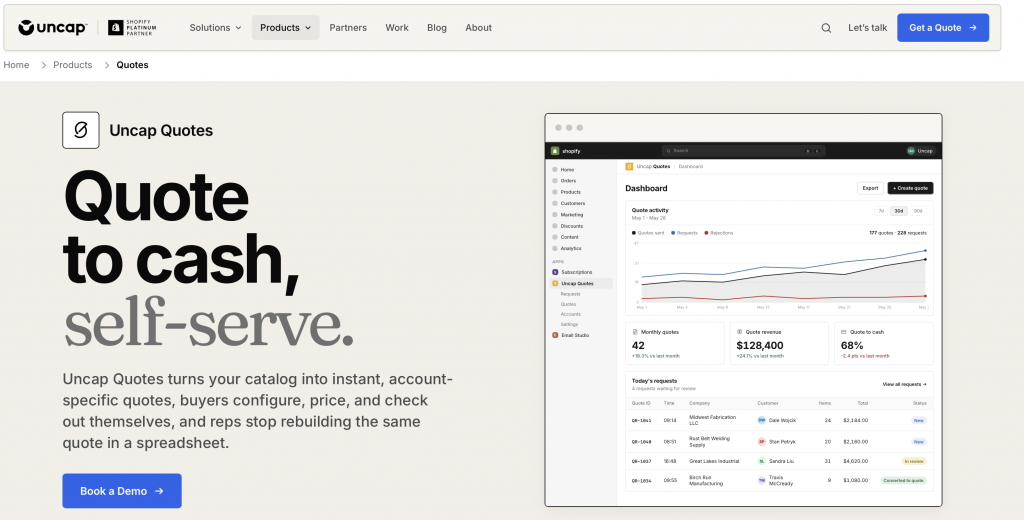
For teams that need more than a basic quote request form, Uncap Quotes provides a fuller quote-to-order workflow inside Shopify. Buyers can request custom pricing, while merchants can manage quote revisions and approvals without moving the process into emails or spreadsheets.
Once the quote is approved, it can be converted into a Shopify order in one click. This makes it useful for manufacturers, distributors, and wholesalers that regularly handle negotiated pricing or quote-based orders.
Category 3: For Managing the Backend & Logistics
These apps help you manage the financial side, your product data, and your connections to other business systems.
6. AReceivables
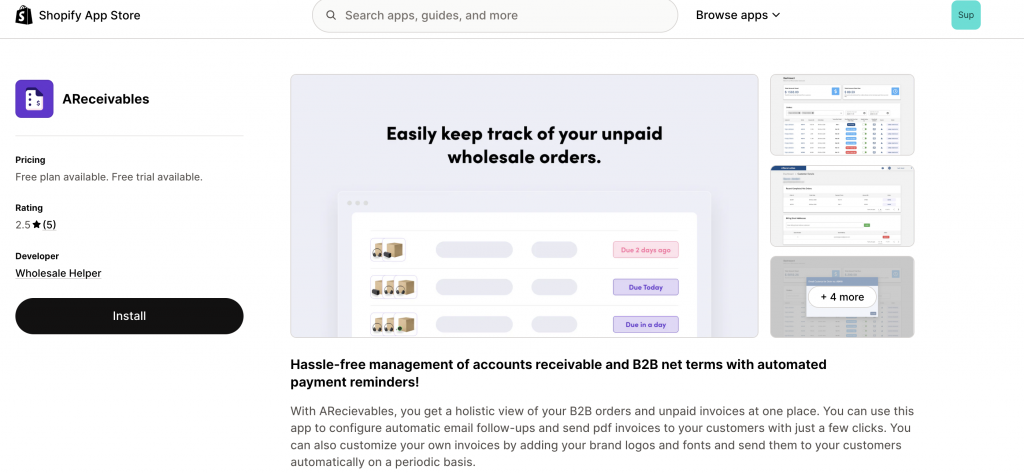
If you let your partners pay by invoice, you need a way to manage that. AReceivables helps you track all your outstanding invoices and payments. It can even send automatic reminders to your partners when an invoice is due.
7. Matrixify
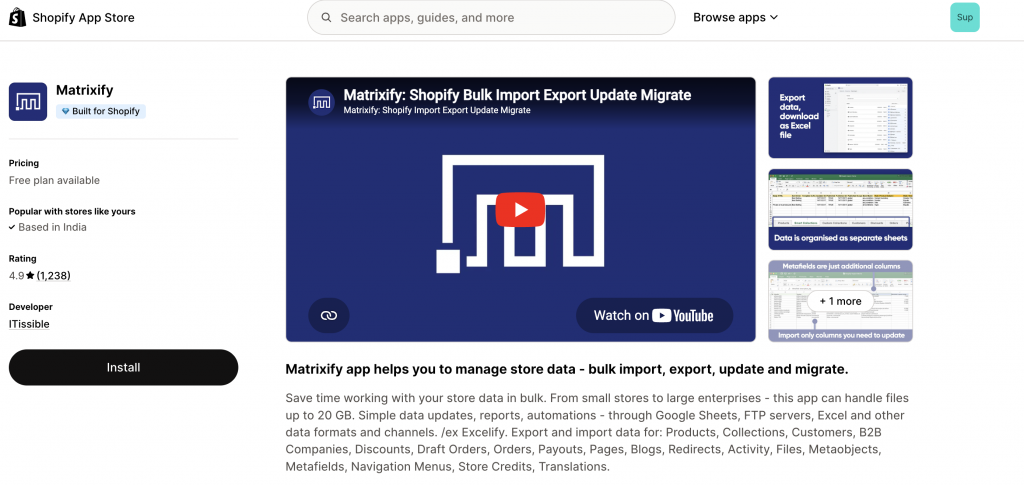
If you have a huge product catalog, this app is your best friend. It lets you make massive changes to your product information, inventory, and even customer details all at once using a spreadsheet. Instead of manually updating prices for a thousand products, you can do it in minutes. It’s an incredibly powerful way to manage all the data that comes with a wholesale business.
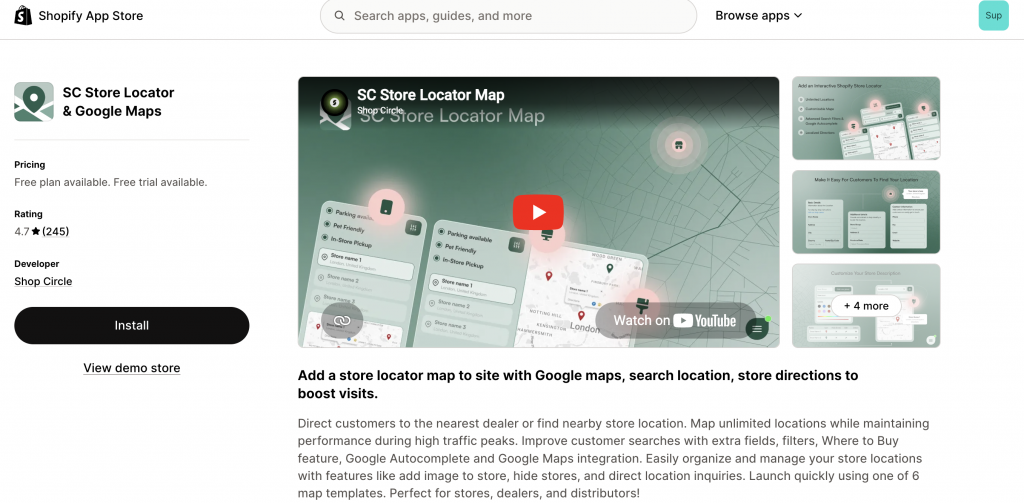
8. SC Store Locator
If you sell your products through other businesses, you’ll want to help your end customers find them. This app puts a beautiful map on your site that shows all your dealers or distributors. It’s a great way to support your partners and drive more local sales.
Category 4: For Connecting Everything Together
Your Shopify store is just one piece of your business. These apps help it talk to your other systems so everything runs smoothly.
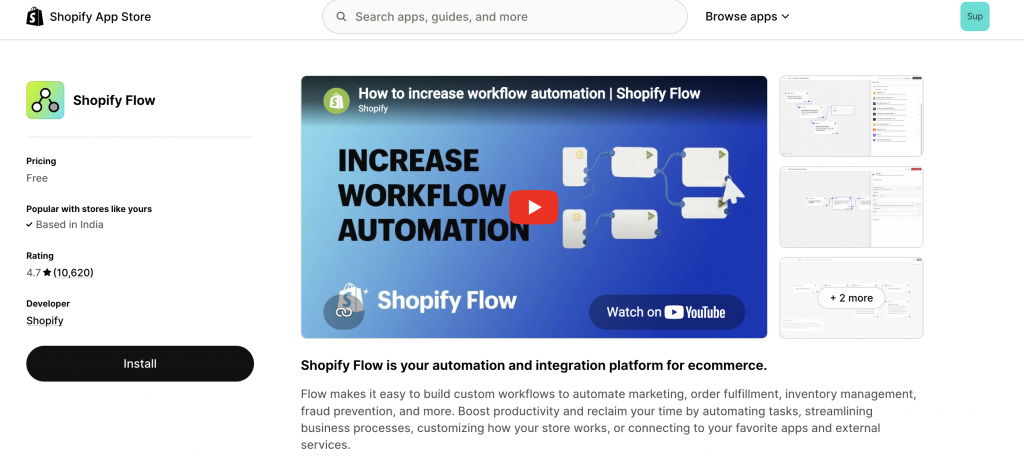
9. Shopify Flow
This app is like having a personal assistant that automates all the tedious tasks. You can set up simple rules like, “When a new reseller fills out our signup form, automatically add a ‘pending approval’ tag to their account.” It’s a great way to cut down on manual work and keep your processes organized. (Note: This is mostly for Advanced and Plus plans).
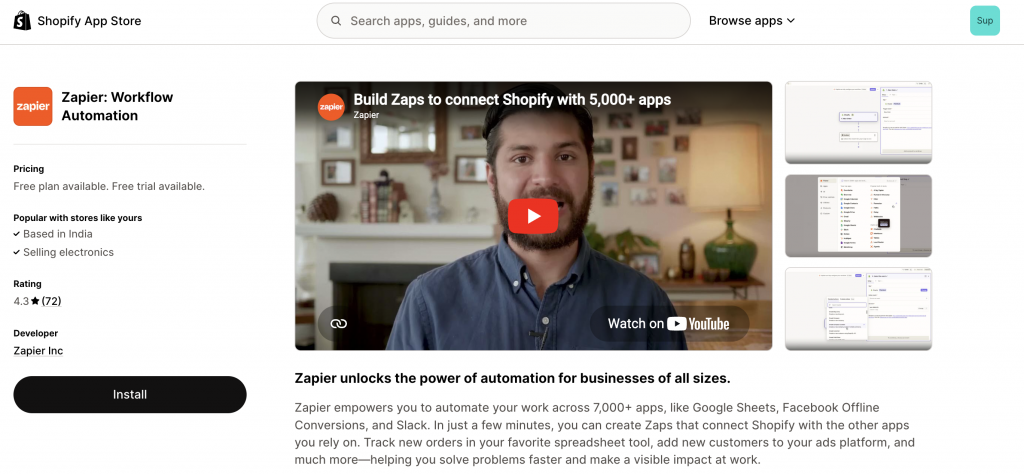
10. Zapier – Workflow Automation
Zapier is the ultimate connector. It lets you link Shopify to thousands of other apps and services. Want to automatically send an invoice to QuickBooks? Or sync your customer list to your CRM? Zapier can handle all of that, so you don’t have to spend your time manually moving data around.
Quick Summary of the Apps You Need
| Category | Apps to Use | Why They’re Important |
| Pricing & Ordering | Wholesale Pricing Discount B2B, WSH Order Form & ReOrder | Handle custom pricing, volume discounts, and make bulk ordering simple. |
| Security & Access | Wholesale Lock Manager B2B | Keep your wholesale catalog and prices hidden from the public. |
| Payments & Locations | AReceivables, SC Store Locator | Manage invoices and help customers find your resellers easily. |
| Automation & Data | Matrixify, Shopify Flow, Zapier | Edit huge amounts of product data and connect your store to other software. |
| Advanced Sales | Request a Quote, B2B Account Management Apps | Handle custom quotes and provide a better account experience for your partners. |
Together, these apps give you everything you need to run a successful wholesale business on Shopify without a huge price tag or the complexity of a second store.
When native B2B is not enough, Wholesale Pricing Discount B2B is the next step.
Try our Wholesale Pricing Discount B2B app for free !
Trusted by over 16,000 Shopify merchants
Frequently Asked Questions About Shopify Apps for Managing Distributors & Resellers
Can I use these apps to manage different prices in different countries?
Yes, you can use these apps with Shopify’s Markets feature. By using customer tags, you can set pricing rules that automatically adjust for different regions and their unique tax rules, like VAT or GST.
Can Shopify native B2B replace wholesale apps?
Sometimes, yes. If your B2B setup is simple, Shopify’s native B2B features may be enough. But if you need customer tag pricing, locked public pages, reseller-only catalogues, flexible wholesale discounts, custom order forms, or more control over the buying experience, apps can still be useful.
How should I organize distributor and reseller customer tags?
Keep tags simple. Use tags like Distributor, Reseller, Dealer, Retailer, VIP Wholesale, Pending Approval, and Approved B2B. Avoid creating too many tags early, or pricing and access rules can become hard to manage later.
Should distributors and resellers get the same pricing?
Not always. A distributor usually needs a deeper discount because they resell to another retailer or dealer. A reseller or retail partner may only need normal wholesale pricing. Create separate pricing groups so you do not give distributor-level pricing to every buyer.
Can these apps help me automatically approve new reseller accounts?
The best way to automate this is by using a form builder and Shopify Flow. You can set up a form that automatically tags new applicants as “pending.” Once you manually approve them, you can change the tag to “approved,” which can then automatically give them access to your wholesale catalogue.
What if I want to integrate my reseller orders with my accounting software or warehouse?
This is where Zapier is a lifesaver. You can use it to automatically send new order data from Shopify to your accounting software (like QuickBooks or Xero), your CRM, or a third-party warehouse.