

Key Takeaways
- Net payment terms allow approved buyers to place an order now and pay later within a fixed number of days.
- Common net terms include Net 7, Net 15, Net 30, Net 45, Net 60, and Net 90.
- Net 30 means the buyer must pay the invoice within 30 days from the invoice date or order issue date, depending on your policy.
- Net terms are common in B2B and wholesale because business buyers often need time to receive goods, resell products, or complete internal payment approvals.
- Offering net terms can help increase larger orders and improve buyer relationships, but it can also create cash flow risk if not managed properly.
- Shopify B2B supports payment terms for companies and company locations, including Net 7, Net 15, Net 30, Net 45, Net 60, Net 90, due on fulfillment, and due on receipt.
- Before offering net terms, set clear eligibility rules, credit limits, due dates, late payment policies, and reminder workflows.
If you sell wholesale or B2B, some customers may not want to pay immediately at checkout. Instead, they may ask for payment terms like Net 30, Net 60, or Net 90. This means they can place the order now and pay the invoice later within the agreed time period.
Net payment terms are common in B2B because business buyers often need time to receive products, move inventory, get internal approvals, or manage cash flow before paying.
In this guide, we’ll explain what net payment terms mean, common examples, why they matter, when to offer them, and how Shopify merchants can support net terms for wholesale and B2B customers.
What does Net Payment Terms mean?
Net payment terms define how long a buyer has to pay an invoice after an order is placed, fulfilled, or invoiced.
For example, if you offer Net 30, the buyer gets 30 days to pay the invoice. If you offer Net 60, the buyer gets 60 days. If you offer Net 90, the buyer gets 90 days.
The exact start date should be clearly defined in your policy. Some businesses count the due date from the invoice date. Others count it from the order date, shipment date, or fulfillment date.
Simple examples:
- Net 7: Payment is due within 7 days.
- Net 15: Payment is due within 15 days.
- Net 30: Payment is due within 30 days.
- Net 60: Payment is due within 60 days.
- Net 90: Payment is due within 90 days.
- Due on receipt: Payment is due when the invoice is received.
- Due on fulfillment: Payment is due when the order is fulfilled.
Shopify’s B2B payment terms support common options such as Net 7, Net 15, Net 30, Net 45, Net 60, Net 90, due on receipt, and due on fulfillment.
Different Durations of Net Payment Terms
Net 30, Net 60, and Net 90 all mean the buyer can pay later. The difference is the number of days they have to pay.
| Payment term | Meaning | Best for |
|---|---|---|
| Net 7 | Payment due within 7 days | New buyers, smaller orders, early trust-building |
| Net 15 | Payment due within 15 days | Smaller B2B orders or lower-risk customers |
| Net 30 | Payment due within 30 days | Most common wholesale and B2B orders |
| Net 45 | Payment due within 45 days | Buyers with longer internal approval cycles |
| Net 60 | Payment due within 60 days | Larger buyers or established customers |
| Net 90 | Payment due within 90 days | Large enterprise buyers, but higher cash flow risk |
For most wholesale stores, Net 30 is a safer starting point. Net 60 and Net 90 should usually be offered only to trusted buyers with good payment history.
Why offer Net Payment Terms to your B2B customers?
B2B customers typically buy in bulk and often have large orders. This can put a strain on their cash flow, which is why offering net payment terms to them can be so beneficial.

1. To help your B2B customers manage their finances
By offering net payment terms, you are essentially offering more time to your B2B customers to arrange money to make payment of their total order amount. This can help them immensely when it comes to managing their finances and can make them more likely to do business with you in the future.
2. To expand the number of customers who are able to buy
Net payment terms can also help expand the number of customers who are able to buy from you. This is because many businesses that sell B2B products have a strict policy when it comes to payment and require all payments to be made upfront.
However, by offering net payment terms, your B2B business is giving more flexibility to potential customers who may not have the ability to pay for your products or services upfront.
3. To build better relationships with customers
Net payment terms can also be a valuable tool for building relationships with your customers. When you offer flexible payment options, it shows that you can be trusted whenever a customer is facing a cash flow problem and wants to buy products to sell further and make profits. This will show that you value their business. This way you create long-term, loyal customers who are more likely to do business with you in the future.
How to offer Net Terms to your B2B customers on Shopify?
There are a few ways to offer net payment terms on Shopify.
Method 1: Use Shopify B2B payment terms
If you use Shopify B2B, you can set payment terms for a company or company location.
Shopify’s payment terms define how long a company has to pay for an order. You can set terms for each company location, and B2B customers can view these terms on orders they place through your online store.
Common Shopify B2B payment term options include:
- Due on fulfillment
- Net 7
- Net 15
- Net 30
- Net 45
- Net 60
- Net 90
Basic setup flow:
- Go to Customers > Companies in Shopify admin.
- Select the company or company location.
- Edit the Payment terms section.
- Choose the payment term type.
- Optional: add a deposit requirement if available for your plan.
- Save and test the B2B checkout flow.
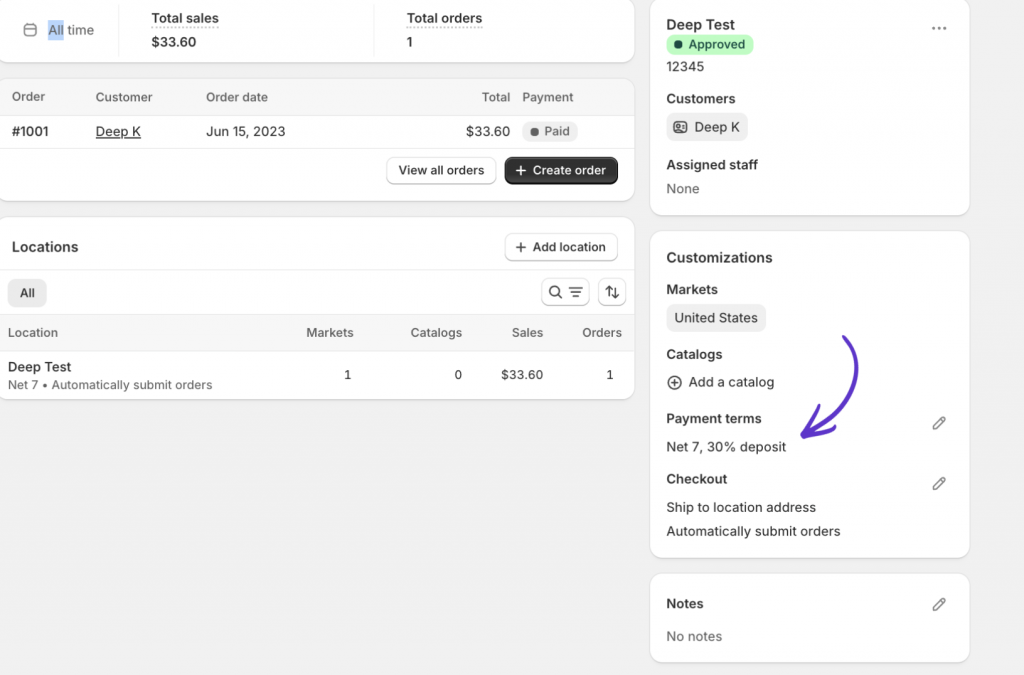
This method is best if you already use Shopify B2B companies and want native payment terms tied to approved business buyers. If your buyers also need purchase order numbers, invoice payment, or pay-later workflows, it may be worth setting up a wholesale checkout with net terms and PO support instead of handling every order manually.
Method 2: Use a wholesale payment terms app
If you need more flexibility, you can use a wholesale or B2B payment terms app.
This can be useful when you need:
- Customer tag-based net terms
- Manual approval workflows
- Net 30, Net 60, or Net 90 options for selected customers
- Pay later buttons
- Invoice-based checkout
- Purchase order workflows
- Customer group-based terms
- Different payment terms for different wholesale tiers
This is useful for merchants who are not using native B2B companies or who need more control over customer segments and app-based workflows.
Method 3: Use draft orders and invoices
Some stores manage net terms manually using draft orders and invoices.
This can work for small wholesale programs, especially when your team manually reviews each order.
A simple flow:
- Customer places a wholesale request.
- Your team creates a draft order.
- You send the invoice.
- Customer pays based on the agreed payment term.
- Your team tracks the payment manually.
This method is simple, but it can become hard to manage as order volume grows.
Offer discounts for early payments
You can also choose to offer discounts to your B2B customers for paying or clearing their wholesale invoices before the due date or a specific time period. You can set this based on the total order value or on the number of days.
For example:
| Date of invoice | Net Term | Total order value | Pay Between | Early Payment Discount |
| 01-01-2026 | 15 Days | $1000 | 0-10 Days | 10% |
| 02-02-2026 | 30 Days | $2000 | 0-15 Days | 12% |
| 03-03-2026 | 60 Days | $3000 | 0-30 Days | 15% |
Net Terms discounts
Net Payment Terms examples
Example One: Company X offers net 30 payment terms to Company Y. This means that Company B has up to 30 days to pay their invoice from the date of purchase. If they do not pay within this time period, they will be charged a late fee.
Example Two: Company A offers net 60 payment terms to Company B. This means that Company D has up to 60 days to pay their invoice from the date of purchase. If they do not pay within this time period, they will be charged a late fee.
Once you decide on net payment terms, you need to convey or offer them to your customers.
Where to offer Net Payments Terms?
There are a few different places where you can offer net payment terms to your customers. Here are some common places you can mention or tell about the net payment terms for your products or services:

(i) In the order invoice
The most common place to mention your net payment terms is to add to the invoices. You can include them in the body of the invoice or in the footer.
(ii) On the website or checkout page
Another place you can offer net payment terms is on your website. If you have an e-commerce store, you can include the payment terms on the checkout page. This way, your customers will get an idea about what kind of products they can purchase and pay after a specific time period after the delivery.
(iii) In contracts
You can also include information about net payment terms in your contract with customers. This way, there you can prevent confusion about due payment dates and late fees if the payment is not done in a specific time or according to the decided net term.
(iv) Verbal agreements
You can also verbally agree on net terms with your B2B customers before you provide them with any goods or services. This is a good option if you want to ensure both parties understand and agree to the terms.
No matter where you choose to offer net payment terms, make sure that the terms are clear and easy to understand. You don’t want there to be any confusion about when payments are due or what the consequences are for late payments.
Net terms vs pay later vs credit limit
These terms are related, but they are not the same.
| Term | Meaning |
|---|---|
| Net terms | Buyer must pay within a fixed number of days, such as Net 30 |
| Pay later | General phrase for letting customers buy now and pay later |
| Credit limit | Maximum unpaid balance a buyer can have at one time |
| Deposit | Partial upfront payment before the remaining balance is due |
| Invoice payment | Buyer pays after receiving an invoice |
Example:
A buyer may have Net 30 terms with a $5,000 credit limit. This means they can place orders and pay within 30 days, but their unpaid balance should not go above $5,000.
How to follow up on unpaid Net Payment Invoices?
If you have B2B customers who have not paid their invoices within the agreed-upon net terms, it is important to follow up with them or send a reminder. This will help you ensure that you are getting paid on time and avoid any negative consequences for your business. Many modern businesses find it challenging to track payment due dates and ensure timely payments.
There are a few different ways that you can follow up on unpaid invoices.
- Through a phone call to the customer
- Through an email reminder for payment or a physical letter by post
- Through an automated email drip campaign
If you still haven’t received payment after following up, you can hire a collections agency. This is the last resort, but it can help you get the money that you are owed.
Tips for Offering Net Payment Terms
Now that we’ve gone over what net terms are and why they can be so beneficial, let’s take a look at a few things you should keep in mind while offering net terms to your customers:

(a) Be Clear and Concise
Make sure that your invoices or contracts clearly state the net payment terms you are offering. This will maintain the transparency between you and your customer about payment due dates and other terms.
(b) Be Flexible
Don’t be afraid to negotiate payment terms with your customers. You may find that some customers are willing to pay more quickly if you offer a discount for doing so.
(c) Offer Incentives
Consider offering incentives for customers who pay their invoices on time. This could include a small discount or early access to new products or services.
(d) Get Paid Quickly
One of the biggest benefits of offering net payment terms is getting paid more quickly. To make sure this happens, set up a system for tracking payments and follow up with late-paying customers as soon as possible.
(e) Penalty for Late Payments
While offering net terms to your B2B customers, you can also choose to charge them a penalty fee for the late payment of a break in the agreement of the decided net terms. This will help you receive net payments on time from your customers.
By following these tips, you can make sure that offering net payment terms is a smooth and successful process for both you and your customers.
Final Thoughts
Net payment terms are common in wholesale and B2B because business buyers often need time to receive goods, process invoices, and pay later.
Terms like Net 30, Net 60, and Net 90 can make buying easier for approved customers and may help increase larger orders. But they also create cash flow risk if you do not manage them properly.
On Shopify, you can offer net terms using native Shopify B2B payment terms, wholesale payment terms apps, or manual draft orders and invoices. The best setup depends on how many B2B buyers you have and how much control you need over approval, invoice, and checkout workflows.
For most wholesale stores, the safest approach is to start with trusted buyers, shorter terms, clear credit limits, and a simple payment reminder process.
When native B2B is not enough, Wholesale Pricing Discount is the next step.
Try our Wholesale Pricing Discount app for free !
Trusted by over 16,000 Shopify merchants
FAQs
What are net payment terms?
Net payment terms define how long a buyer has to pay an invoice after an order is placed, fulfilled, or invoiced. For example, Net 30 means payment is due within 30 days.
What is due on receipt?
Due on receipt means payment is due as soon as the customer receives the invoice.
What is due on fulfillment?
Due on fulfillment means payment is due when the order is fulfilled or shipped.
Can I offer net payment terms on Shopify?
Yes. Shopify B2B supports payment terms for companies and company locations, including Net 7, Net 15, Net 30, Net 45, Net 60, Net 90, due on receipt, and due on fulfillment.
What is the difference between net terms and a credit limit?
Net terms define when payment is due. A credit limit defines how much unpaid balance a buyer can have at one time. For example, a customer may have Net 30 terms with a $5,000 credit limit.
Are net payment terms risky?
Yes, they can be. Net terms can lead to late payments, unpaid invoices, and cash flow pressure. You can reduce the risk with credit checks, shorter terms for new buyers, deposits, reminders, and clear overdue policies.