
Key Takeaways
- Selling on orderchamp can help brands get discovered by independent retailers, especially in Europe.
- A marketplace can reduce some early friction, but it usually comes with platform rules, fees, and less control over the full customer relationship.
- Your own wholesale store gives you more control over branding, pricing, customer data, payment terms, shipping rules, and repeat ordering.
- Marketplaces can be useful for finding new buyers. Owned stores are usually stronger for retaining and growing those buyers over time.
- Many brands can use both: marketplace for discovery, own store for long-term wholesale operations.
- If you use Shopify, you can build a wholesale store with native Shopify B2B features, wholesale apps, or a mix of both.
Selling on a wholesale marketplace like Orderchamp can be useful if you want to reach retailers faster. You get access to an existing marketplace, buyer discovery, order tools, and a platform that retailers already use to find products. For newer brands, that can be helpful.
However, when you sell only through a marketplace, you do not fully control the buying experience. Your products sit next to other brands, and your margins may be affected by commissions or platform fees. That is why many brands eventually ask the same question: Should we sell on Orderchamp, or should we build our own wholesale store? The answer is not always one or the other.
In this guide, we will compare both options so you can decide which one makes more sense for your wholesale business.
What is OrderChamp?
OrderChamp is a wholesale marketplace platform for independent resellers, wholesale merchants, and unique brands. Based in the Netherlands, the platform focuses on helping small and medium-sized businesses discover and source distinctive products that stand out in competitive markets. OrderChamp has a large number of wholesale merchants from which you can get products like cosmetics, home decor, fashion, and more. Retailers benefit from easy browsing, low minimum order requirements, and exclusive discounts, which help them manage costs while maintaining variety in their product offerings.
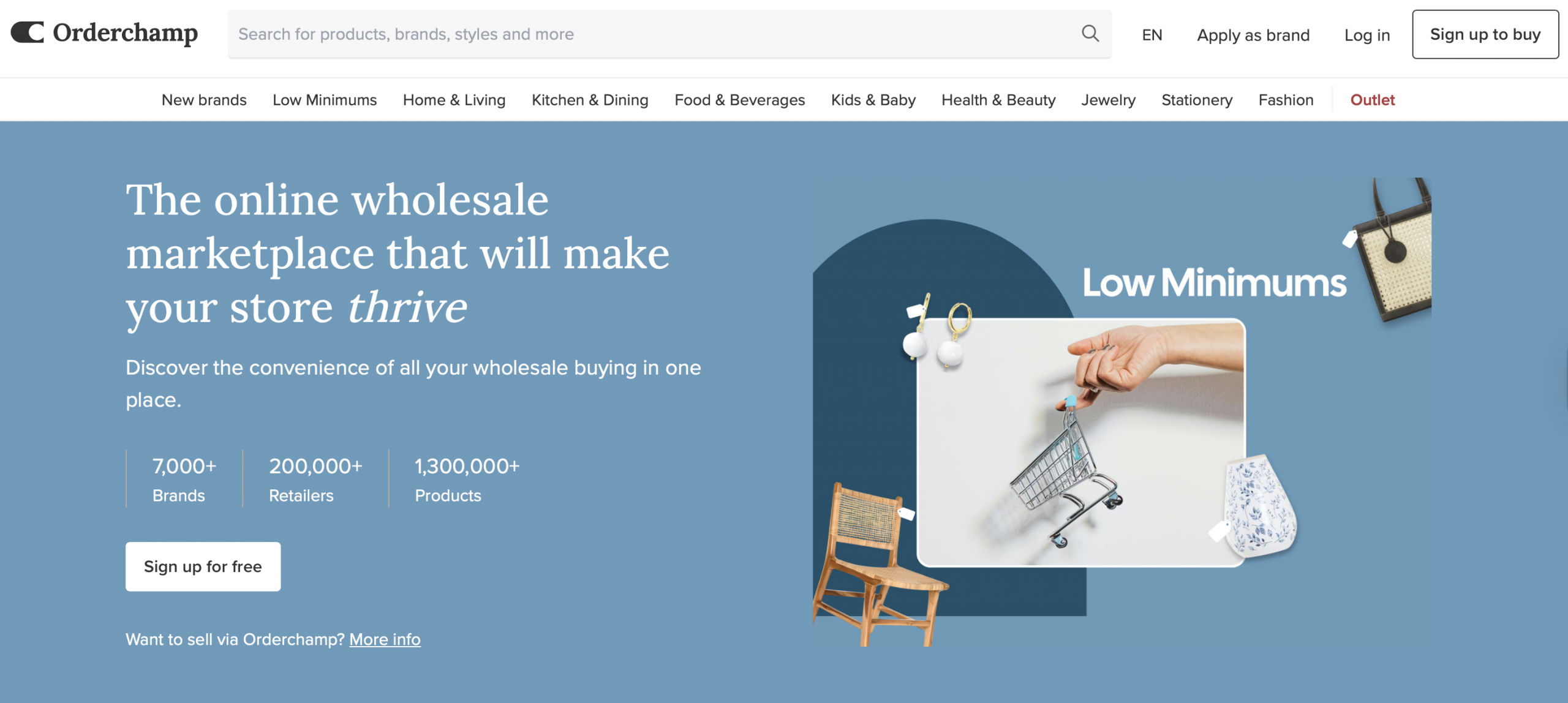
For wholesalers, OrderChamp provides an opportunity to expand their reach by showcasing products to a broad audience of retailers across the globe. The platform handles aspects like order processing, payment collection, and even marketing which allows suppliers to focus on product quality and fulfilment. However, while OrderChamp simplifies wholesale operations, businesses must adhere to its terms and at the same time also share a percentage of their sales with the platform, which can impact overall profitability.
What is a self-owned Wholesale store?
A self-owned wholesale store is a platform that a business fully controls to sell its products directly to retailers or bulk buyers. Unlike third-party marketplaces, a self-owned store allows businesses to establish their own brand identity, manage customer relationships, and set specific pricing and discount strategies without intermediaries.
These stores operate through dedicated e-commerce websites, often built on platforms like Shopify, and are tailored to meet the unique needs of B2B operations, such as offering tiered pricing, volume discounts, and flexible payment terms.

The biggest advantage of a self-owned wholesale store is the freedom it provides in terms of customization and profitability. Businesses can create a personalized shopping experience, maintain full ownership of customer data, and avoid commission fees charged by third-party platforms.
Additionally, a self-owned store enables better scalability and direct communication with buyers, which helps in fostering long-term partnerships and building trust.
OrderChamp vs Having Your Own Wholesale Store: A Comparative Look
Control Over Branding
- OrderChamp: Branding on OrderChamp is centered around the marketplace itself, which limits how much your business can highlight its unique identity. Your products are listed alongside competitors, which is not the ideal case to build your brand identity.
- Own Store: A self-owned wholesale store allows complete control over your brand’s image, from website design to product presentation. This enables businesses to create a super personalized experience for their customers that resonates with their brand story.
Customer Relationships
- OrderChamp: Direct interaction with your customers is minimal, as the platform controls communication. This lack of engagement can limit your ability to build lasting relationships.
- Own Store: Owning your store gives you full access to customer data which enables you to foster loyalty through personalized interactions, targeted marketing, and better customer service.
Profit Margins
- OrderChamp: The platform charges commission fees and other costs, which eat into your profit margins. So ultimately, as you increase your sales, you also end up increasing the amount that you pay as commission to the platform.
- Own Store: By selling through your own wholesale store, you keep 100% of your profits, apart from minimal transaction fees. This ensures better revenue retention and financial control.
Flexibility and Customization
- OrderChamp: Businesses are restricted to the platform’s features, which may restrict them to create a super customised version of their store, in the way they want.
- Own Store: A self-owned store offers endless flexibility. Businesses can implement tailored pricing, volume discounts, and advanced wholesale shipping rates to better serve their customers.
Scalability and Independence
- OrderChamp: Your business remains tied to the marketplace’s ecosystem. If the platform changes its policies or terms and conditions, then those changes can affect your operation.
- Own Store: A self-owned store ensures full independence. You can scale your business on your own terms, adding new features, products, and markets without depending on a third party.
In essence, owning your wholesale store provides unparalleled control, flexibility, and profitability and helps you build direct relationships with your customers. It empowers businesses to operate independently and focus on long-term growth which ultimately makes it a more sustainable option in the competitive wholesale landscape.
Quick Comparison: Orderchamp vs Your Own Wholesale Store
| Area | Orderchamp | Your own wholesale store |
|---|---|---|
| Best for | Marketplace discovery | Long-term wholesale control |
| Buyer access | Existing retailer marketplace | You bring and own the buyers |
| Branding | Limited by marketplace layout | Full control |
| Customer data | Platform-controlled | Owned by your business |
| Pricing flexibility | Depends on platform rules | More flexible |
| Commission | Marketplace commission and subscription may apply | No marketplace commission, but store costs apply |
| Repeat orders | Inside marketplace flow | Can be customized |
| Buyer approval | Platform-based | Fully controlled by you |
| SEO value | Mostly benefits marketplace | Builds your own domain |
| Long-term asset | Marketplace listing | Owned wholesale channel |
Starting Your Own Wholesale Store on Shopify
Shopify is a practical option if you want to build your own wholesale store. You can use Shopify to manage products, customers, orders, payments, shipping, and storefront content from one place. For wholesale, you can also use native Shopify B2B features, wholesale apps, or a mix of both.
A Shopify wholesale store can help you create:
- Customer accounts
- Company profiles
- Wholesale catalogs
- Customer-specific pricing
- Volume discounts
- MOQ rules
- Locked products
- Login to view price
- Wholesale application forms
- Approval workflows
- Bulk order forms
- Reordering options
- Net payment terms
- Purchase order numbers
- Wholesale shipping rules
Shopify’s native B2B features are now available across Basic, Grow, Advanced, and Plus, although the exact feature depth depends on the plan. Shopify Plus still gives more advanced controls for larger B2B operations.
Wholesale apps on Shopify can help when you need more storefront control, such as hiding prices from public visitors, creating customer tag-based discounts, locking collections, or giving buyers a faster bulk ordering experience.
The main benefit is that your wholesale channel becomes your own. You are not only getting orders. You are also building a direct buyer list, improving repeat ordering, collecting customer data, and creating a wholesale experience that can grow with your brand.
A Simple Hybrid Strategy
You do not have to choose only one channel. A practical setup can look like this:
- Use Orderchamp to reach new retailers who may not know your brand yet.
- Use your Shopify wholesale store for approved buyers, repeat orders, custom pricing, and direct relationships.
- Encourage buyers to reorder through your own store when it makes sense.
- Use email, reorder reminders, and buyer-specific offers to grow the relationship over time.
- Keep marketplace sales as a discovery channel, not the only wholesale channel you depend on.
This gives you the benefit of marketplace exposure without giving up control over your long-term wholesale business.
Summing up
Orderchamp can be useful if you want to get your products in front of independent retailers, especially in Europe. It gives you marketplace exposure and a ready-made platform for wholesale discovery. For newer brands, that can be valuable. But a marketplace is still a rented channel. You may not fully control branding, customer relationships, pricing flexibility, buyer data, or the repeat ordering experience.
Your own wholesale store gives you more control. You can manage pricing, approvals, payment terms, private products, bulk ordering, and customer relationships in a way that fits your business.
The best setup for many brands is not Orderchamp vs your own store. It is Orderchamp for discovery, and your own Shopify wholesale store for long-term wholesale growth.
When native B2B is not enough, Wholesale Pricing Discount B2B is the next step.
Try our Wholesale Pricing Discount app for free !
Trusted by over 16,000 Shopify merchants
Frequently Asked Questions
Does Orderchamp charge commission?
Yes. Orderchamp describes its model as a monthly subscription plus commission on shipped orders. Its public pages mention tiered commissions that can vary by sales volume, so brands should check the latest pricing inside Orderchamp before joining.
Why should a brand have its own wholesale store?
A self-owned wholesale store gives you more control over pricing, customer data, branding, payment terms, shipping rules, buyer approval, and repeat ordering. It also helps you build a direct wholesale channel instead of depending only on a marketplace.
Can I build a wholesale store on Shopify?
Yes. Shopify can be used to build a wholesale store. You can use native Shopify B2B features, wholesale apps, or both to manage wholesale pricing, private products, buyer approval, bulk ordering, payment terms, and reorders.
Should I use both Orderchamp and my own Shopify store?
For many brands, yes. Orderchamp can help with discovery, while your own Shopify wholesale store can handle direct relationships, repeat buyers, custom pricing, and long-term wholesale operations.