
Key Takeaways
- A good Shopify wholesale store is not just a normal online store with lower prices. B2B buyers need a different buying experience.
- The most important Shopify wholesale store features include customer-specific pricing, login-based access, buyer approval, Net Terms, MOQs, bulk ordering, private catalogues, tax handling, and region-based pricing.
- Shopify now offers native B2B features across more plans, but plan limits still matter. Basic, Grow, and Advanced can work for simpler B2B setups, while Shopify Plus gives more advanced catalog and company-level control.
- Most growing wholesale stores use a mix of Shopify’s native features and Shopify wholesale apps to create a better B2B buying experience.
- The goal is simple: make it easy for approved wholesale buyers to log in, see the right products and prices, place large orders, reorder quickly, and manage their account without emailing your team every time.
Building a successful wholesale store on Shopify goes far beyond merely offering lower prices. A truly effective B2B Shopify store demands distinct logic, a specialized structure, and tailored workflows that differ significantly from a standard B2C storefront.
Whether you’re developing a comprehensive wholesale portal or strategically integrating wholesale functionality into your existing Shopify store, this guide will break down the must-have Shopify wholesale store features – and precisely why they are critical for securing and serving B2B clients.
Here, we elaborate on essential features for a successful Shopify wholesale store, ensuring a smooth B2B ordering process.
1. Customer-Specific Pricing (Tiered or Fixed)
Why it’s a Must-Have: Wholesale buyers inherently expect personalized pricing structures. This can vary based on their purchase volume, the nature of their partnership, or their account history. Generic pricing simply won’t suffice for B2B relationships.
What a Robust Solution Includes:
- Per-customer or Per-group Pricing: The ability to assign unique price lists to individual B2B accounts or specific wholesale customer groups (e.g., distributor-tier-1, reseller-approved).
- Volume/Quantity Break Discounts: Implementing tiered pricing where the price per unit decreases as the order quantity increases (e.g., “Buy 50+ units, get 20% off”).
- Region- or Market-Based Pricing: Dynamically displaying prices in different currencies (e.g., GBP for UK buyers, USD for USA, INR for India) based on the customer’s location or assigned market.
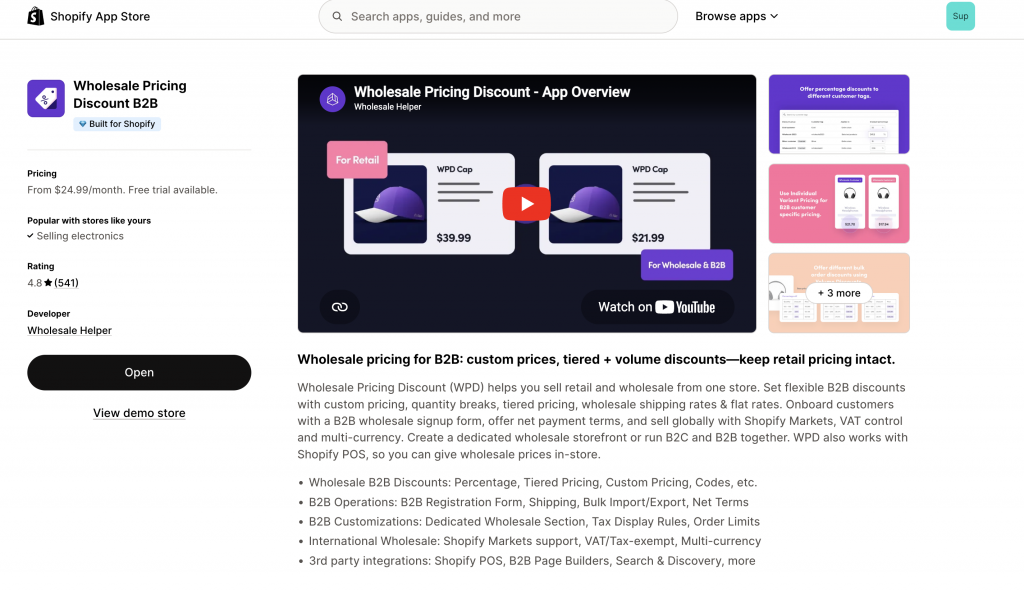
📌 Recommended Solution: Use customer tags, native Shopify B2B catalogues, or a pricing app like Wholesale Pricing Discount B2B to show the right prices to the right buyers. This is especially useful if your wholesale pricing depends on buyer type, order volume, product category, or region.
2. Login-Based Access to Products or Pricing
Why it’s a Must-Have: Maintaining exclusivity is paramount for a B2B Shopify store. You often need to keep sensitive wholesale SKUs, wholesale pricing, or specific Net Terms hidden from the general public or unauthorized retail shoppers.
What a Robust Solution Includes:
- Login Required for Wholesale Catalog: The private wholesale catalog or specific B2B-exclusive products should only be accessible after a wholesale buyer logs into their approved account.
- Access Gated by Customer Tag: Control content visibility dynamically based on specific customer tags (e.g., dealer-approved, b2b-active).
- “Request Access” Messaging: For unapproved visitors attempting to access gated content, display a clear message prompting them to “Login to view pricing” or “Request Wholesale Access.”
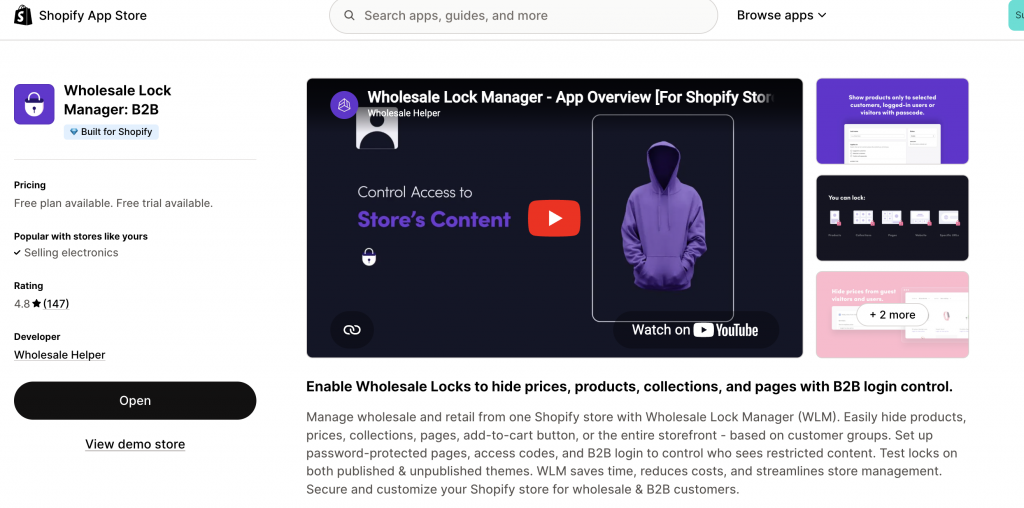
📌 Recommended Solution: Implement access control either through custom theme Liquid code (for development teams) or, more efficiently, using a third-party Shopify app like Wholesale Lock Manager B2B. This ensures your private wholesale catalog remains secure.
You can learn more about restricting specific content on your Shopify store using this guide on creating a private wholesale area on Shopify.
3. B2B Customer Registration & Approval Flow
Why it’s a Must-Have: To protect your wholesale pricing and ensure you’re working with legitimate businesses, you need a robust process to control who can access your B2B portal and collect necessary qualification data.
What a Robust Solution Includes:
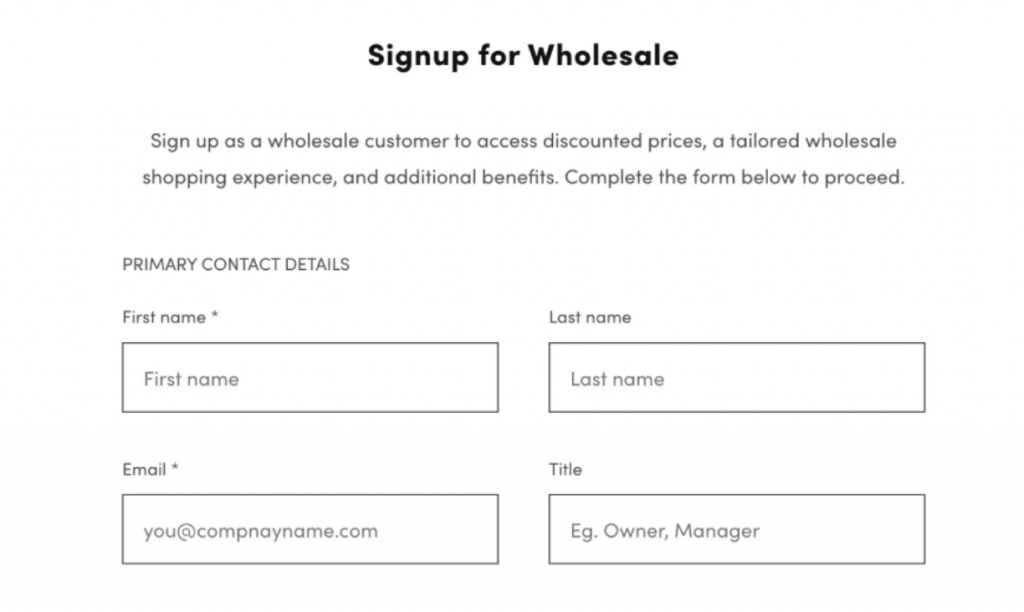
- Custom B2B Sign-up Form: A dedicated application form that collects essential B2B information (e.g., Company Name, Tax ID/VAT, Website, Business Type).
- Manual or Automated Approval: A streamlined workflow for reviewing applications and either manually approving them or, in some cases, partially automating approvals.
- Automatic Customer Tagging: The ability to automatically apply customer tags (e.g., wholesale-tier-1, net-30-pending, dealer-australia) to new applicants for segmentation and access control.
📌 Recommended Solution: Use a B2B registration form, Wholesale Pricing Discount B2B, Shopify Forms, Shopify Flow, or a form tool like Jotform or Typeform depending on how much information you need to collect.
If you need to collect documents like resale certificates, tax exemption proof, or distributor agreements, make sure the form supports file uploads.
4. Net Payment Terms (e.g., Net 30, Net 60)
Why it’s a Must-Have: Unlike retail, many B2B customers, particularly large corporations, government agencies, and distributors, do not pay at the point of checkout. They expect invoicing and post-payment workflows with Net Terms (e.g., payment due 30, 45, or 60 days after invoice date).
What a Robust Solution Includes:
- Manual or Conditional “Pay by PO” Option: A payment method at checkout explicitly allowing “Pay by Purchase Order (PO)” or “Invoice (Net Terms)” for approved wholesale accounts.
- Draft Orders & Invoicing: The ability to convert standard orders into Draft Orders and send formal invoices with specified Net Terms post-checkout.
- Payment Reminders & Tracking: A system to monitor payment due dates and automate reminders for outstanding POs and invoices.
📌 Recommended Solution: Utilize Shopify’s manual payment methods combined with Draft Orders for core functionality. For advanced tracking, automated reminders, and seamless integration with accounting software, a dedicated app like AReceivables is highly beneficial for B2B Shopify stores.
5. Bulk Ordering and Reordering Functionality
Why it’s a Must-Have: Wholesale customers typically purchase large quantities across numerous SKUs. Their ordering process needs to be hyper-efficient, and they frequently repeat past orders.
What a Robust Solution Includes:
- One-Page Order Form: A streamlined interface where B2B buyers can quickly view multiple SKUs, input quantities, and add them to the cart from a single page, often displaying wholesale pricing dynamically.
- Reorder Button from Past Orders: A convenient option that allows wholesale buyers to quickly re-populate their cart with items from previous purchases.
- Optional CSV Order Upload: For very large or complex orders, the ability for buyers to upload a CSV file with their order details can significantly reduce friction.
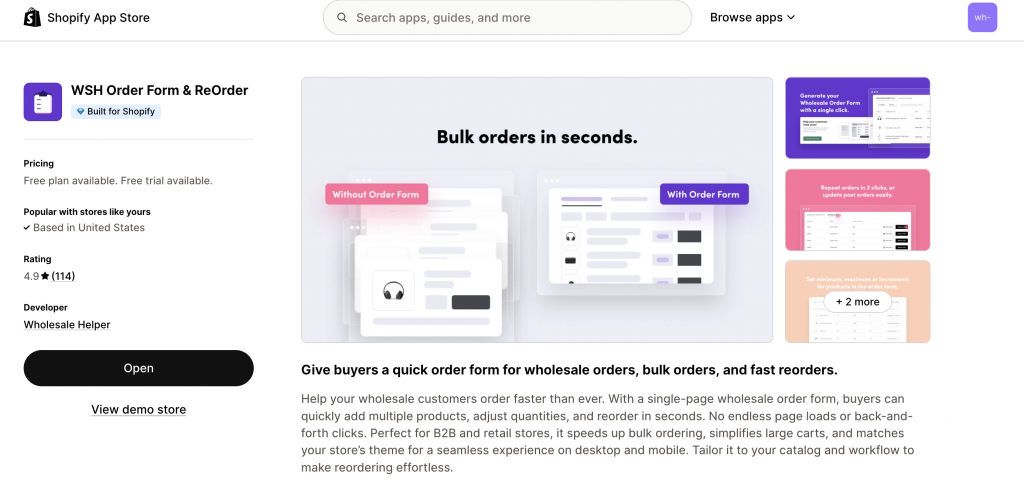
📌 Recommended Solution: A specialized tool like WSH Order Form & ReOrder is designed to provide this highly efficient ordering experience, making it a must-have for any Shopify wholesale store focused on B2B order management.
6. Minimum Order Requirements (MOQs)
Why it’s a Must-Have: Enforcing Minimum Order Quantities (MOQs) is crucial for protecting your margins and ensuring profitability in wholesale transactions. It sets clear expectations for B2B buyers regarding order size.
What a Robust Solution Includes:
- MOQ per Product or Variant: The ability to set specific minimum purchase quantities for individual wholesale products or their variants.
- Minimum Cart Value: Enforcing a minimum total order value before a wholesale buyer can proceed to checkout.
- Clear Messaging: Displaying MOQ requirements prominently at the product page and cart level for transparency.
📌 Recommended Solution: Most comprehensive Shopify wholesale pricing apps (including Wholesale Pricing Discount B2B) offer robust support for MOQ enforcement, making it easy to integrate this crucial B2B rule.
7. Dynamic Wholesale Price List & Catalog View
Why it’s a Must-Have: B2B buyers often prefer to browse a catalog-style price list or quickly access all wholesale pricing in one view, rather than navigating a consumer-focused website page by page.
What a Robust Solution Includes:
- Collection or Product Page with Dynamic Wholesale Pricing: A dedicated, gated collection or page that automatically displays the correct wholesale pricing (including tiered discounts) for the logged-in B2B customer.
- Optional PDF Download or Printable Layout: The ability for wholesale buyers to download or print a customized price list for their records.
- Dynamic Pricing Tables: Clearly showing tiered discount breakpoints directly on product pages within the private wholesale catalog.
📌 Recommended Solution: This can be effectively implemented using a combination of a gated collection (via Wholesale Lock Manager B2B) that’s populated with wholesale-only products, and a powerful pricing app like Wholesale Pricing Discount B2B to display dynamic tiered pricing tables. Order form apps (like WSH Order Form & ReOrder) also excel at providing a quick-view price list.
8. Easy Account Management for B2B Buyers
Why it’s a Must-Have: B2B customers expect comprehensive account-level tools that go beyond simple cart-and-checkout flows. Streamlined account management enhances their experience and fosters loyalty.
What a Robust Solution Includes:
- Clear Login Portal: An easily accessible and intuitive login portal for wholesale buyers.
- Saved Information: Ability to store and manage multiple shipping addresses, preferred payment methods (Net Terms), and contact details.
- Order History & Reorder Access: Easy access to a complete history of past orders and the option to quickly reorder.
- Invoice & PO Access: A section where B2B buyers can view past invoices, Purchase Orders (POs), and payment statuses.
📌 Recommended Solution: Use Shopify customer accounts as the foundation. Then add B2B-specific tools for reorder flows, invoices, Net Terms, and pricing visibility.
If you use native Shopify B2B, buyers can sign in to access their B2B products and pricing. If you use apps, make sure the account experience still feels simple and clear after login.
9. Advanced Tax/VAT Handling & Exemptions
Why it’s a Must-Have: Wholesale stores frequently deal with complex tax scenarios, including tax-exempt B2B customers (e.g., non-profits, resellers) and varied regional VAT/GST requirements across international markets.
What a Robust Solution Includes:
- Tagging for Tax-Exempt Buyers: The ability to identify and apply a specific customer tag (e.g., tax-exempt-us, vat-registered-eu) to wholesale customers who qualify for tax exemption.
- VAT/GST Support for International B2B: Correct calculation and display of VAT or GST based on the customer’s region (USA, UK, EU) and your tax registrations.
- Correct Price Display: Ensuring prices are displayed correctly as inclusive or exclusive of tax based on B2B customer type and regional regulations.
📌 Recommended Solution: The Wholesale Pricing Discount B2B app is one of the few Wholesale Apps on Shopify that works with Shopify Markets and provides a strong foundation for international tax handling. Using these, you can ensure accurate tax calculations and exemptions for your B2B customers globally.
10. Region-Based Access & Pricing
Why it’s a Must-Have: For global wholesale operations, B2B buyers in different countries or markets often require specific pricing, payment terms, or even access to different product sets due to varying regulations, shipping costs, or market strategies.
What a Robust Solution Includes:
- Multi-Currency Pricing: The ability to offer and display wholesale pricing in local currencies (e.g., GBP, USD, INR, AUD) based on the customer’s region or assigned market.
- Market-Specific Net Terms or Shipping Rules: Applying unique Net Terms options or shipping rates based on the B2B customer‘s geographic location.
- Tag-Based Product/Collection Access by Region: Gating access to specific wholesale-only products or collections exclusively for B2B buyers in certain regions using customer tags (e.g., b2b-uk-exclusive, distributor-india-only).
📌 Recommended Solution: A powerful synergy between Shopify Markets (for currency and base tax rules), customer tags (for fine-grained segmentation), and access control apps (like Wholesale Lock Manager B2B) or pricing apps (like Wholesale Pricing Discount B2B) allows you to build a sophisticated and regionally optimized Shopify wholesale store.
When native B2B is not enough, Wholesale Pricing Discount B2B is the next step.
Try our Wholesale Pricing Discount B2B app for free !
Trusted by over 16,000 Shopify merchants
Final Summary: Your Essential Shopify Wholesale Store Features Checklist
A strong Shopify wholesale store should make the buying process easy for approved B2B customers while keeping private pricing, products, and payment terms protected.
At minimum, your wholesale setup should include:
- Customer-specific pricing
- Login-based access
- B2B registration and approval
- Net Terms or PO payment options
- Bulk ordering and reordering
- Minimum order requirements
- Private wholesale catalog or price list
- Easy B2B account management
- Tax, VAT, or GST handling
- Region-based pricing and access
You do not always need Shopify Plus or a second Shopify store to build this. A simple wholesale setup can be built using customer tags, Shopify’s native B2B features, and purpose-built wholesale apps.
If your store needs flexible pricing, private products, gated collections, customer-specific discounts, and a faster ordering flow, Wholesale Helper apps can help you create a better B2B experience without heavy custom development.
Frequently Asked Questions (FAQs) About Must-Have Shopify Wholesale Store Features
Do I need Shopify Plus to create a wholesale store?
No. You do not need Shopify Plus just to create a functional wholesale store. You can use Shopify’s native B2B features, customer tags, locked collections, pricing apps, registration forms, and bulk order forms on other Shopify plans. Shopify Plus gives more advanced controls, but it is not the only option.
What is the most important feature for a Shopify wholesale store?
Customer-specific pricing is usually the most important feature. Wholesale buyers expect different pricing based on buyer type, order volume, relationship, or region. Without proper pricing logic, the wholesale experience becomes hard to manage.
Can I hide wholesale prices from retail customers?
Yes. You can hide wholesale prices until a buyer logs in or gets approved. This can be done using customer tags, theme logic, native B2B setup, or an app like Wholesale Lock Manager B2B.
Can I approve wholesale customers before they see pricing?
Yes. You can create a wholesale registration form, review applications, and approve only qualified buyers. Once approved, you can tag the customer or add them as a B2B company so they can access private products and pricing.
Can I offer Net 30 terms on Shopify?
Yes. You can offer Net 30 or other payment terms to approved B2B buyers. This can be done using Shopify payment terms, manual payment methods, purchase order options, or receivables apps depending on your setup.
What is the best way to help wholesale buyers place large orders?
A one-page bulk order form is usually the best option. It lets buyers search products, enter quantities, choose variants, and add multiple items to cart from one screen. This is much faster than opening each product page separately.