

Key Takeaways
- Shopify testing helps you check whether your store, checkout, payments, apps, theme, and customer flows are working correctly.
- You should test your store before major campaigns, theme updates, app installs, checkout changes, and sales events.
- Shopify supports test orders through Shopify Payments test mode or Shopify’s Bogus Gateway, depending on your payment setup.
- Automated testing can help check repeatable flows like add to cart, checkout, search, navigation, and page performance.
- Manual testing is still needed for design, user experience, copy, layout, mobile behavior, and complex buyer workflows.
- B2B and wholesale stores should also test customer-specific pricing, locked products, order forms, MOQ rules, payment terms, and buyer approval flows.
Conducting periodic testing for an online store is a crucial part of any e-commerce business that wants to ensure reliability and high performance.
If you’re running your store on the Shopify platform, there are many scenarios you need to consider before planning a test, such as :
- Scope of the testing
- The parameters involved
- Expected output/ test results.
Shopify testing is important since it helps to minimize potential errors and flaws in any Shopify store. It further helps with ensuring maximum uptime of your store for your customers so that they can easily purchase products (without facing any issues).
In this article, we will discuss everything about Shopify testing, including its types and automation aspects. We will also cover different approaches to Shopify testing and how to automate it using procedures and tools.
So, let’s dig in!
What is Shopify Testing?
Shopify testing is a type of testing carried out by Shopify experts, store owners, developers, etc., on a Shopify store in order to test and make sure all the components of that store are working as expected.
Why is Shopify Testing important?
Shopify testing is important because your store depends on many connected parts. A change in one area can affect another area.
For example, a new app can affect the cart. A theme update can affect product pages. A checkout change can affect payment tracking. A discount setup can affect margins. A shipping rule can block orders in certain locations.
You should test your Shopify store:
- Before launching the store
- Before a big sale or campaign
- After installing a new app
- After updating your theme
- After changing checkout settings
- After changing payment methods
- After changing shipping rates
- After adding new product options
- After setting up new discount rules
- Before Black Friday, holiday sales, or major ad campaigns
For stores using Shopify Payments, Shopify says test mode can be used to simulate transactions. Shopify also warns that live customers cannot place real credit card orders while payment providers are in test mode, so this should be handled carefully.
What are the different approaches to Shopify Testing?
What are the different approaches to Shopify testing?
1. Functionality testing
Functionality testing checks whether important store features work properly.
Test things like:
- Product search
- Filters
- Product options
- Add to cart
- Cart updates
- Discount codes
- Checkout
- Shipping rates
- Payment methods
- Order confirmation
- Customer account login
For B2B stores, also test wholesale pricing, customer tags, locked products, order forms, and net payment terms.
2. User interface testing
User interface testing checks how your store looks and behaves for customers.
Test:
- Mobile layout
- Desktop layout
- Buttons
- Menus
- Product images
- Cart drawer
- Forms
- Popups
- Sticky bars
- Checkout display
- Error messages
This still needs manual review because automated tools cannot always judge whether the page feels clear, trustworthy, and easy to use.
3. Security testing
Security testing checks whether your store and connected tools are safe.
For Shopify merchants, this can include:
- Staff permissions
- App permissions
- Customer account access
- Admin access
- Fraud checks
- Suspicious orders
- Theme code changes
- Third-party scripts
Shopify also provides fraud analysis to help merchants identify potentially fraudulent orders and review risky orders before fulfillment.
4. Performance testing
Performance testing checks how fast your store loads and how it behaves during traffic spikes.
Test:
- Homepage speed
- Product page speed
- Collection page speed
- Cart speed
- Image loading
- App impact
- Mobile performance
- Checkout handoff
This is especially important before major campaigns or paid traffic pushes.
5. Automation testing
Automation testing uses tools or scripts to test repeatable flows.
For example, an automated test can check whether a customer can open a product page, add an item to cart, go to checkout, and reach the payment step.
Automation is useful for regular checks, but it should not replace manual testing completely.
What is Automated testing?
Automated testing involves the use of automated scripts or tools to carry out periodic tests on a Shopify store. This can help reduce manual testing efforts and ensure that all aspects of a store’s functionality are tested regularly without having to manually go through each test every time.
Automated testing can be used for performance testing, security testing, user interface testing, functionality testing, etc.
Why is it important to automate Shopify Testing?
Automating Shopify testing can be an invaluable asset for e-commerce stores as it helps ensure that the store runs flawlessly at all times.
Automation tests run in an automated manner with minimal effort required from developers or tech professionals. This helps save time and effort in manually running tests each time there are any changes made to the store, further helping keep costs down by reducing labor costs associated with manual testing, such as hiring QA engineers can be expensive.
What are the Benefits of Automating Tests?
- Saves time, money, and effort.
- More consistent than manual tests since they provide repeatable results without any human intervention.
- Helps to ensure that all the features & components of a Shopify store operate as expected.
- Allows developers & testers to quickly detect any issues in the store and fix them swiftly before they can cause disruption for customers.
Test cases for Shopify Testing (Store’s Functionality)
and more…
Real-life examples of issues facing my Shopify merchants:
1. Add-to-cart is not working in the Shopify store
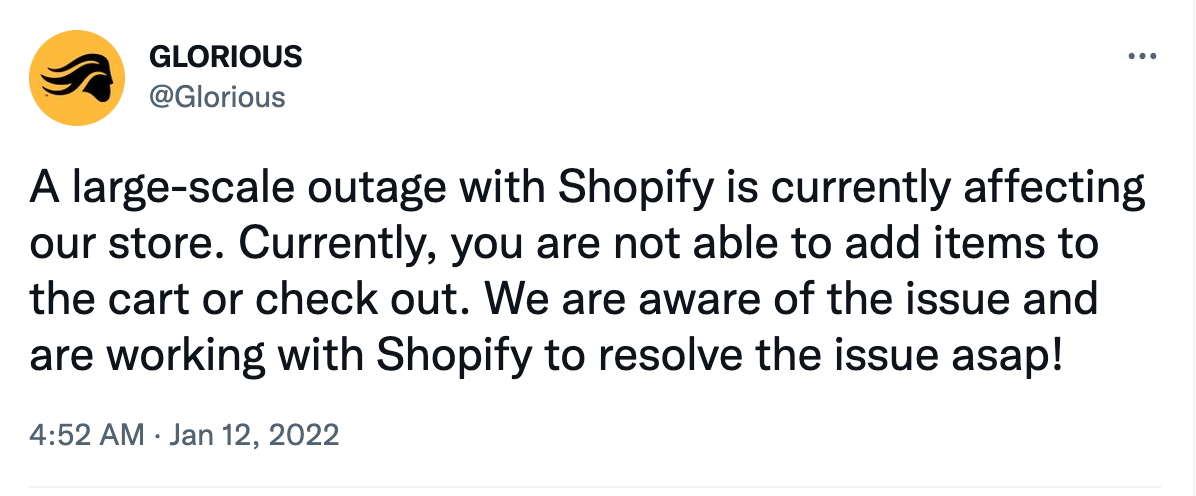
Image source: Twitter (Glorious)
2. Checkout is not working in the Shopify store
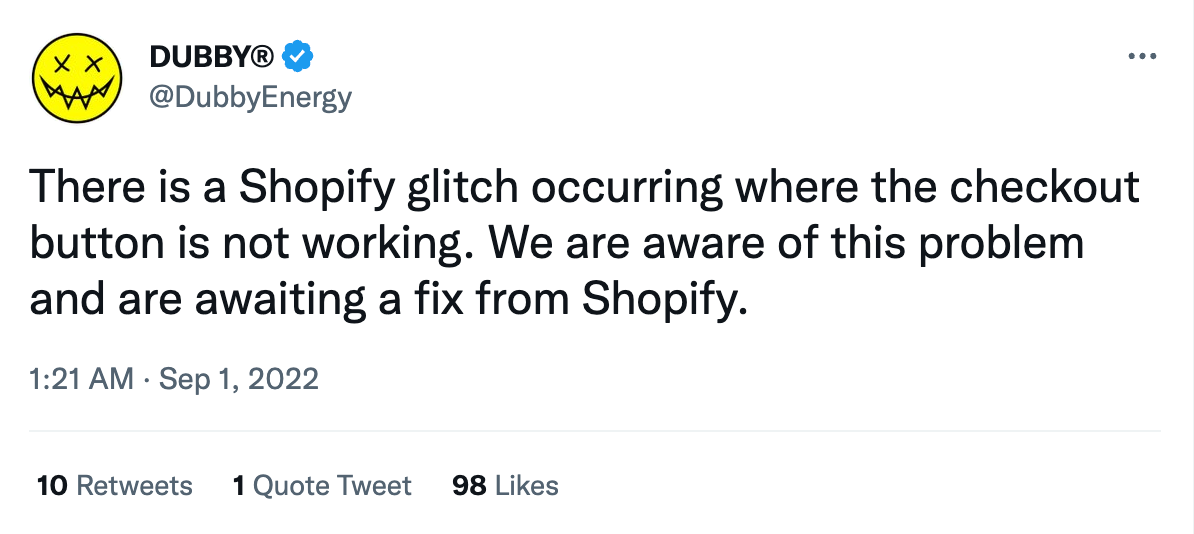
Image source: Twitter (Dubby)
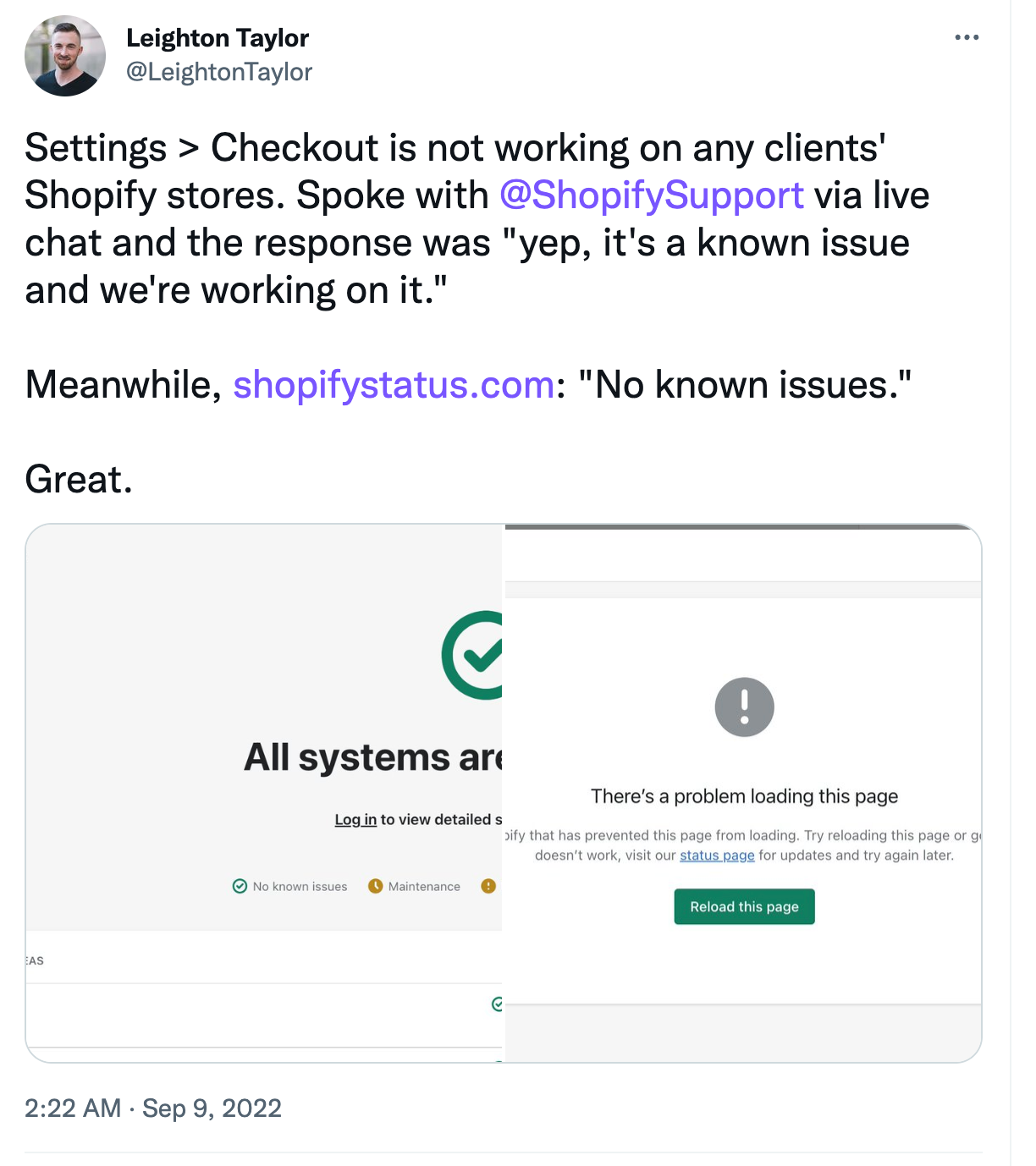
Image source: Twitter (Leighton Taylor)
How is Shopify testing conducted (manually)?
Manually conducting Shopify testing involves a lot of manual effort, including running tests on each individual feature and component.
This means that testers would have to go through the entire store and manually test everything in order to identify any errors or issues present. It’s time-consuming and often tedious work, but it can be necessary for ensuring that all components of the store are working properly.
Manual testing also requires a great deal of technical knowledge, as testers must be able to interpret results and diagnose any problems they find. Furthermore, manually running tests increases the chance of human error, which could lead to false positives or missed issues.
How To Automate Shopify Testing?
Automating your Shopify testing process helps you save time and effort while ensuring the proper functioning of your store.
To automate Shopify testing, there are several tools available like Selenium, Cypress.io, etc., which can be used to perform automated testing tasks such as UI tests, performance tests, security tests, etc., on various browsers & devices.
Also, there are many other SaaS solutions available in the market that will allow you to automate testing on your Shopify store.
Best Automated Shopify Testing Tools
- Lambdatest – For UI and browser compatibility testing)
- Pingdom, Google PageSpeed Insights, GTMetrix – For performance & speed testing
- SiteCheck – For Security Testing/Scanning
Conclusion
Shopify Testing is an important aspect for any e-commerce business running on Shopify and automation plays a crucial role in it. Automation helps to ensure that your store runs efficiently and prevents potential issues from occurring. It also allows developers/testers to focus on other aspects of the store at hand with improved accuracy, scalability, and faster results. Automating Shopify testing should be considered for every e-commerce business running on the Shopify platform for a better success rate of their stores.
The best stores test early and often. Are you?
When native B2B is not enough, Wholesale Pricing Discount B2B is the next step.
Try our Wholesale Pricing Discount app for free !
Trusted by over 16,000 Shopify merchants
Frequently Asked Questions
Why is Shopify testing essential for my online store?
Shopify testing is crucial because it checks your store for any errors or problems that might stop customers from buying your products. Regular testing helps keep your store running smoothly, making sure customers have a good shopping experience.
How often should Shopify app testing be done?
You should test your Shopify apps every time you add a new one or update an existing one. It’s also a good idea to test before big sales or events to make sure everything works right and doesn’t turn away customers.
Why automate Shopify website testing
Automating your testing saves you a lot of time because it does the tests for you. This means you can test more often without spending extra money or needing more people to do the work.
Can automated tests do everything a Shopify website tester does?
Automated tests can do a lot, but sometimes you still need a person to check things out. People can spot problems that automated tests might miss, especially when it comes to how easy and fun your store is to use.
How do functionality tests help my Shopify store?
Functionality tests make sure that important parts of your store, like the checkout or product search, work right. This is key to making sure customers can buy what they want without any hassle.
What should B2B Shopify stores test?
B2B stores should test customer login, approval flow, customer-specific pricing, locked products, MOQ rules, bulk order forms, net terms, PO numbers, draft orders, and wholesale shipping rules.





1 Comment
Ӏ like the valuable information you ρrovide in your articles.
I’ll boⲟkmark your weblog and check again here frequently.
I’m quite sure I’ll learn plenty of new stuff right here!
Best of luck for the next!