

Key Takeaways
- Etsy is a marketplace for products that are made, designed, handpicked, or sourced by the seller.
- Shopify is an ecommerce platform for building your own online store.
- Etsy can help with marketplace discovery, but sellers have less control over branding, customer experience, and buyer ownership.
- Shopify gives more control over storefront design, marketing, apps, payments, wholesale pricing, and customer relationships.
- Etsy charges listing fees, transaction fees, payment processing fees, and possible offsite ad fees.
- Shopify charges a monthly plan fee, payment processing fees, and third-party transaction fees if you use a third-party provider instead of Shopify Payments.
- Many sellers use Etsy for discovery and Shopify as their main branded store.
In today’s technology-driven world, you can easily build an e-commerce store for your business and sell products online. When deciding on the best platform for building an e-commerce store, the “Shopify vs Etsy” debate often arises.
These two platforms, Shopify and Etsy, are the preferred choices of most small and medium-sized businesses to run their stores and sell their products online to their retail and B2B/wholesale customers. Each platform offers unique benefits, so choosing between Shopify and Etsy is a critical decision for entrepreneurs aiming to maximize their online presence.
While Shopify and Etsy share many similarities, they also have many differences. These differences might help you decide which platform is best for your online business.
In this guide, we will discuss all about Etsy vs Shopify, including their benefits, challenges, pros, and cons. We will also help you with deciding which is better, Etsy or Shopify for your business and also what happens if you choose to run your online store on both platforms or connect your existing Etsy store with the Shopify platform. So, let’s dig in!
Short brief about Shopify and Etsy
Shopify is an e-commerce platform that enables small and medium-sized businesses to create a website with a domain name, build their online store, add products, and manage online payments.
Etsy is a marketplace for handmade goods, vintage items, and craft supplies. It allows artisans, crafters, and makers to create an online store for their handmade products. It uses a commission-based model where the sellers pay Etsy a fee for every item sold.
What are the benefits of selling on Etsy and Shopify?
Benefits of Shopify
- You get your own branded e-commerce website.
- You have more control over design, product pages, navigation, and checkout experience.
- You can use apps for reviews, subscriptions, discounts, wholesale pricing and volume discounts, loyalty, SEO, email, and more.
- You can sell retail, wholesale, B2B, subscriptions, digital products, physical products, and services.
- You own more of the customer relationship compared to marketplace selling.
- You can build SEO, email lists, paid ads, and repeat customer flows around your own brand.
Benefits of Etsy
- It can be useful for testing demand before building a full ecommerce store.
- You can reach buyers who are already browsing Etsy.
- It is useful for handmade, vintage, custom, craft, and creative products.
- It is easier to start because you do not need to build a full website first.
- Etsy handles many marketplace basics like search, buyer trust, payments, and reviews.
Why sell on both Etsy and Shopify?
- Reaching out to a larger customer base.
- Sync product inventory and save the time of listing on an individual e-commerce store.
- Easy categorization of products.
- Bulk import of products between two platforms.
- You can take advantage of the specialized marketplace offered by Etsy and use Shopify as your main store for retail customers.
- This will also allow you to combine the marketing channels used by both platforms for increased visibility of products.
What are the similarities between Shopify and Etsy?
Both Shopify and Etsy offer features such as an easy-to-use platform, secure payment options, automated shipping services, marketing tools & analytics. They also provide support for their customers and help them with any technical queries.
What are the differences between selling on Etsy and Shopify? (Etsy vs Shopify)
Customization Options
One of the main differences between Shopify and Etsy is that Shopify focuses more on custom stores and allows users to design their own stores. On the other hand, Etsy focuses more on the marketplace and provides a platform for artisans, crafters, and makers to sell their products with limited customization options.
Product Categories
Shopify supports all types of products whereas Etsy is mainly focused on handmade or vintage items.
Transaction Fees
Shopify and Etsy charge fees very differently.
Etsy charges a listing fee of $0.20 USD per listing, and the listing expires after 4 months. Etsy also charges a 6.5% transaction fee on the listing price plus shipping and gift wrapping. Payment processing fees are charged separately and vary by country.
Etsy also has optional Etsy Plus at $10 USD/month.
There can also be Offsite Ads fees. Etsy says sellers under $10,000 USD in Etsy sales over the past 365 days can be charged 15% on orders attributed to Offsite Ads, while sellers at or above $10,000 USD get a 12% fee and are required to participate for the lifetime of the shop. Etsy says the Offsite Ads fee will not exceed $100 USD per order.
Shopify works differently. Shopify charges a monthly plan fee and payment processing fees. If you use Shopify Payments, Shopify says you are not charged third-party transaction fees for orders processed through Shopify Payments. If you use third-party payment providers, Shopify third-party transaction fees can apply depending on plan and region.
Store Analytics
Shopify offers a robust analytics tool to monitor your store’s performance, while Etsy has limited web analytics capabilities. You can also add 3rd party Shopify apps to track visitors to your store and see their interactions on your product pages.
Etsy also gives shop stats, traffic sources, listing views, conversion data, and marketplace performance insights. But sellers have less control compared to owning a Shopify store and connecting their own analytics stack.
Advertisements / Ad Campaigns
Etsy, as an e-commerce marketplace, allows its store owners (sellers) to display product ads in certain areas of the entire marketplace such as Etsy Search, Category Pages, and Market Pages on both Etsy.com and the Etsy app. For your Shopify store, you can choose to display your product ads or run ad campaigns on platforms like Facebook, Google, TikTok, and Pinterest.
Email Marketing
Etsy sellers can use Etsy Ads to promote listings inside Etsy. Etsy’s advertising policy says Etsy Ads are charged on a cost-per-click basis through a bidding system.
Etsy may also promote listings through Offsite Ads across external platforms. If a sale is attributed to an Offsite Ad, sellers can pay an additional 12% or 15% fee depending on their Etsy revenue in the past 365 days.
With Shopify, you control your own advertising channels. You can run ads on Google, Meta, TikTok, Pinterest, YouTube, marketplaces, influencers, affiliate programs, email, SMS, and other channels.
Read Also: Shopify Marketing – All You Need To Know
Payment Gateway Integration
In addition, Shopify provides more flexibility when it comes to payment options and allows users to integrate multiple payment gateways into their stores. Whereas, Etsy supports only limited payment gateways such as PayPal, Apple Pay, etc.
Community
Both platforms have seller communities, help docs, and support resources.
Etsy has a strong seller community because many makers, artists, and small creative businesses use the platform.
Shopify has a large merchant ecosystem with agencies, developers, app partners, community forums, Shopify experts, and support resources.
Shopify vs Etsy: Quick Comparison
| Area | Shopify | Etsy |
|---|---|---|
| Business type | Own ecommerce website | Marketplace shop |
| Best for | Brands that want control and scale | Handmade, vintage, custom, craft, and creative sellers |
| Traffic | You bring traffic | Marketplace discovery can help |
| Customization | High | Limited |
| Customer ownership | Stronger | More marketplace-controlled |
| Fees | Monthly plan plus payment fees | Listing, transaction, payment, ads, and optional subscription fees |
| Product flexibility | Broader | Must follow Etsy product rules |
| Branding | Full control | Limited by Etsy layout |
| Wholesale/B2B | Stronger with Shopify B2B and apps | Not ideal for advanced wholesale workflows |
| Long-term asset | Your own store and domain | Shop inside Etsy marketplace |
Which one is better for your business? – Shopify vs Etsy
The answer to this question depends on the type of products you are selling and the size of your business. If you are selling handmade goods or vintage items, then Etsy would be a better option as it offers a specialized marketplace for these goods.
On the other hand, if you are planning to set up your own custom store and sell or resell private-label products to retail and wholesale customers, Shopify would be a better choice.
What If You Want to Sell Wholesale?
If you want to sell wholesale or B2B, then Shopify is usually the better option.
Wholesale buyers often need:
- Custom pricing
- Volume discounts
- MOQ rules
- Private products
- Buyer approval
- Net payment terms
- Purchase order numbers
- Bulk order forms
- Repeat ordering
Etsy is not built for advanced wholesale workflows. Shopify can support wholesale through native Shopify B2B features, wholesale apps, or both. This makes it easier to create different pricing, private access, and ordering flows for retail and business buyers.
Can I integrate my Etsy store with Shopify?
Yes, you can connect Etsy and Shopify using integration apps from the Shopify App Store. These apps can help sync products, inventory, orders, and fulfilment between the two platforms.
This is useful if you want to sell on Etsy for marketplace discovery while using Shopify as your main e-commerce website. Do not assume every app handles every workflow perfectly. Test with a few products first before syncing your full catalog.
How to Integrate Shopify with Etsy (Step-by-Step)
You can easily connect your Shopify store with Etsy by following these steps:
Step 1: Set up a Shopify Store
Sign up at Shopify, connect your domain, select a theme, set up payments, and add the products that you want to sell on your Shopify store as well as on other marketplaces like Etsy.
Step 2: Set up an Etsy Store
Sign up to sell on Etsy and list your products.
Step 3: Install an Etsy Integration App from the Shopify App Store
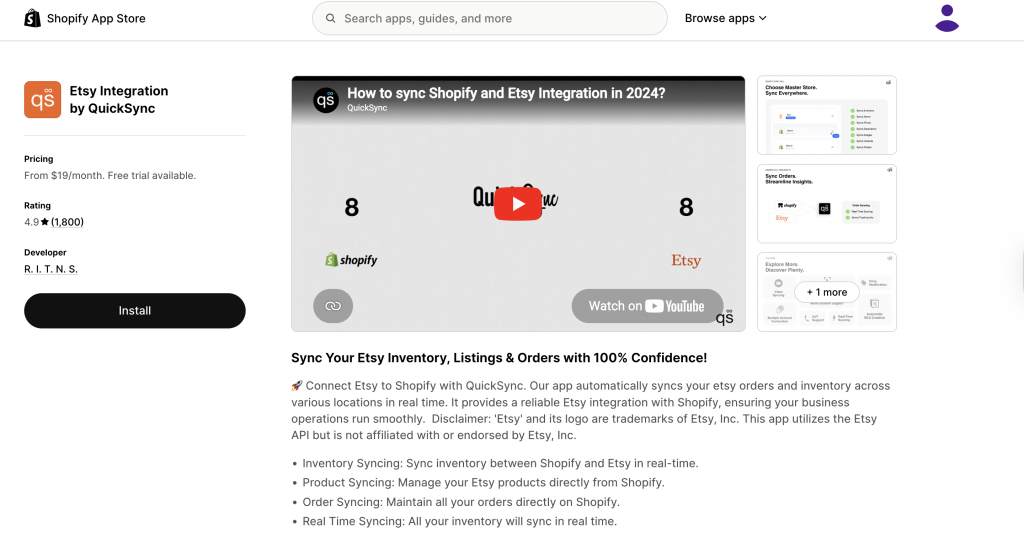
Install the Shopify – Etsy Marketplace integration app from the Shopify App Store. And follow the instructions provided by the integration app to connect Shopify with your Etsy store. You can find other Etsy integration apps too by searching for Etsy on the Shopify App Store.
Step 4: Grant Access in Etsy to connect with the Shopify Store
After installing the app, sign in to your Etsy account and grant the required permissions. Only connect apps you trust, because integration apps may access product, order, and inventory data.
Step 5: Import/Export Products
Do not sync every product immediately. Start with a few products and check whether titles, images, variants, prices, shipping profiles, and inventory sync correctly.
Step 6: Set Shipping Rates
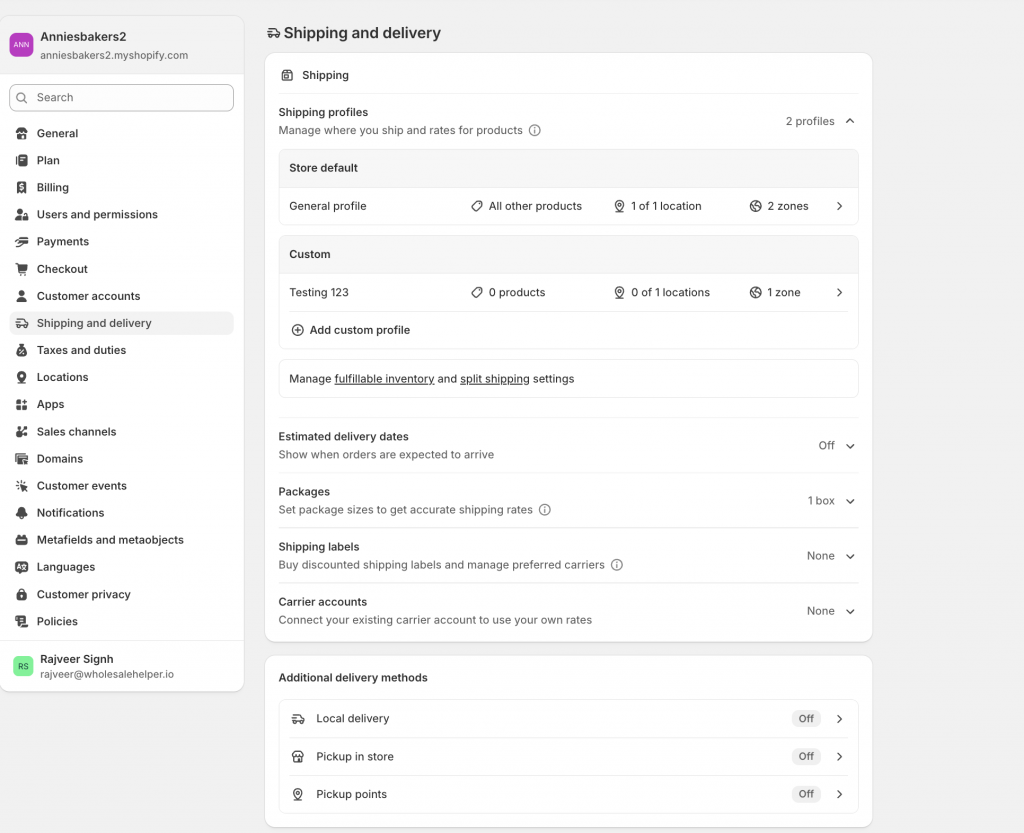
Now, set shipping rates for both stores and change currency settings if needed.
Step 7: Test orders and inventory sync
Place a test order if possible or test the workflow with a low-risk product.
Check:
- Product updates
- Order sync
- Inventory update
- Tracking update
- Customer emails
- Fulfillment flow
- Refund flow
Final Thoughts…
Both Shopify and Etsy provide great ecommerce platforms for merchants to sell their products online. Ultimately, it comes down to what type of products you are selling and your budget for running an online store. Both platforms offer integration apps that can be used for connecting your Etsy store and Shopify store. This will allow customers to purchase products from both stores at once and also make it easier for you to manage orders, shipping, payments, and inventory from one place.
Overall, before making a decision on which platform to use for an online store, it is important to consider the type of products you are selling, your budget, and the features required for running an online store. By doing so, you can make a more informed decision on whether Shopify or Etsy / Shopify + Etsy is the best fit for your business.
When native B2B is not enough, Wholesale Pricing Discount B2B is the next step.
Try our Wholesale Pricing Discount B2B app for free !
Trusted by over 16,000 Shopify merchants
Frequently Asked Questions
What is the difference between Shopify and Etsy?
Shopify is the perfect platform for entrepreneurs looking to launch their own online store and sell a variety of products. If you’re crafting handmade, vintage or one-of-a-kind items, Etsy’s marketplace was created just for you.
Which platform is better for selling handmade or unique items, Shopify or Etsy?
If crafting and selling one-of-a-kind items is your thing, there’s no better platform than Etsy. It comes with a readymade crowd of people who are seeking precisely this type of goods – plus its search technology helps buyers locate new, exciting products.
Can I use both Shopify and Etsy to sell my products?
Yes, you can use both platforms to sell your products. In fact, many sellers use both Shopify and Etsy to reach a wider audience and take advantage of the unique features offered by each platform.
What kind of support do Shopify and Etsy offer to their sellers?
Both Shopify and Etsy offer a range of support options for their sellers, including documentation and tutorials, community forums, and direct customer support via email, chat, or phone. Shopify also offers a dedicated support team for their higher-tier plans.
Is Etsy cheaper than Shopify?
Etsy has lower upfront cost because there is no full ecommerce website plan to pay for. But Etsy charges listing fees, transaction fees, payment processing fees, and possible Offsite Ads fees. Shopify has a monthly plan cost and payment fees, but gives more control over the store and customer relationship.
Does Etsy charge transaction fees?
Yes. Etsy charges a 6.5% transaction fee on the listing price plus shipping and gift wrapping. Etsy also charges a $0.20 listing fee and payment processing fees.